
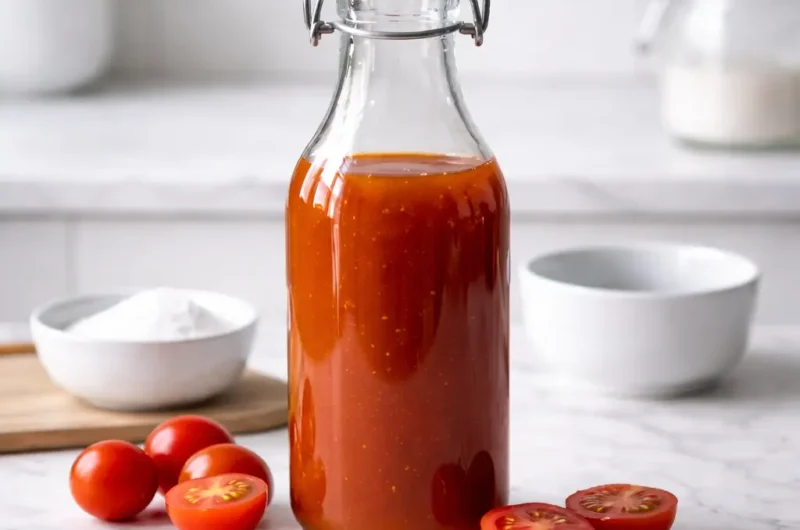
Korean Tomato Syrup is a no-cook tomato cheong made with ripe cherry tomatoes and sugar. From a home-cook perspective, it fits into a normal routine: rinse a clean jar, layer fruit with sugar, and let the juices draw out in the fridge. No boiling, no canning, just measured layering and a quick daily check-in.
If you’re looking for a trustworthy Korean tomato syrup recipe, this guide keeps measurements clear and steps short. You’ll end up with a rosy, pourable syrup plus soft tomato bites that slip into sparkling water, lemonade, yogurt bowls, pancakes, and simple vinaigrettes.
What you’ll find here
- Ratios with and without a scale
- Two paths: quick no-peel or cleaner peeled fruit
- Fridge-first storage timelines that make sense at home
- Uses grouped by task: drinks, breakfast, and light savory ideas
What it tastes like
Sweet-tangy and tomato-forward with a gentle savory note. Korean Tomato Syrup stays pourable while the fruit stays soft—easy to spoon over breakfast or stir into cold drinks without any stovetop time.
Korean Tomato Syrup Recipe: Easy 2-Ingredient Cheong
- Total Time: 15 minutes
- Yield: 2 cups 1x
Description
Korean Tomato Syrup is a no-cook tomato cheong made with ripe cherry tomatoes and sugar, layered and chilled until a rosy, pourable syrup forms with soft tomato bites perfect for drinks and breakfast.
Ingredients
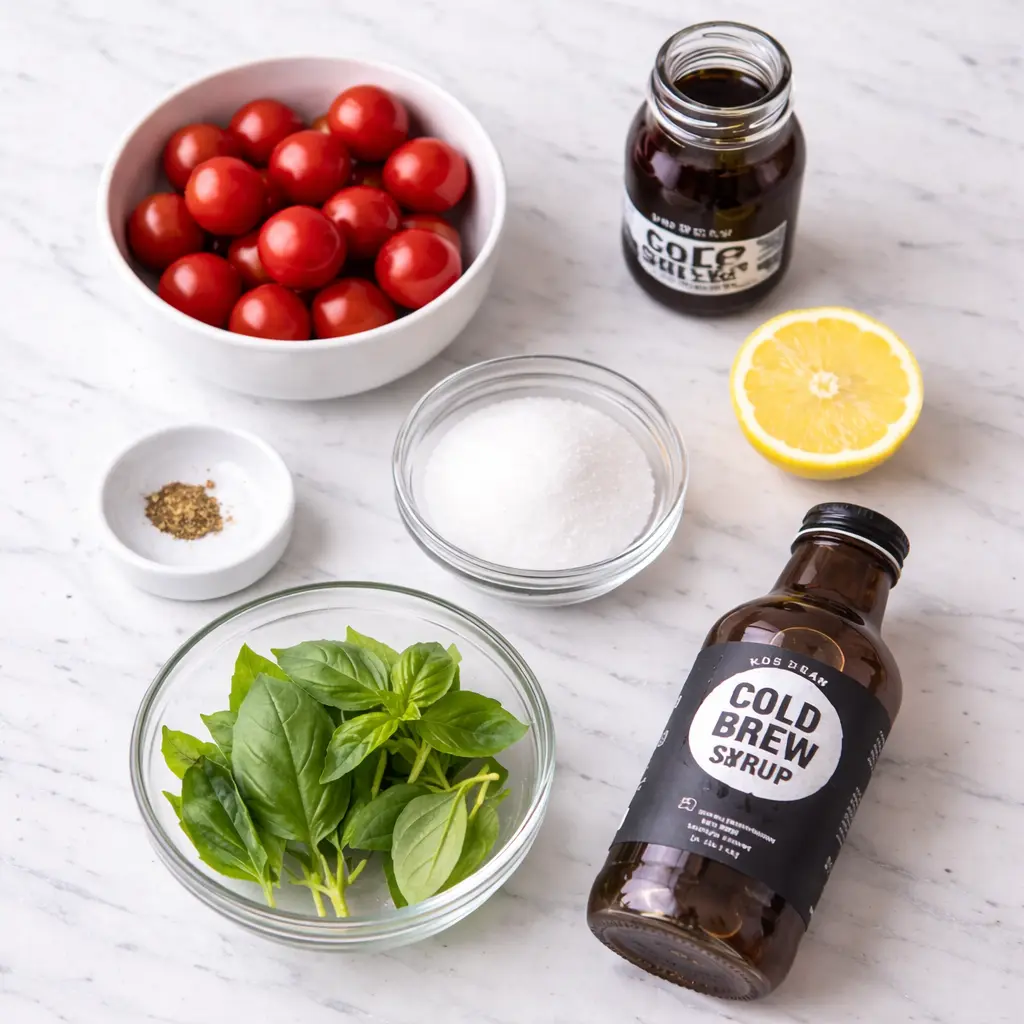
- 400 g cherry or grape tomatoes, rinsed and dried
- 400 g granulated sugar (1:1 ratio by weight)
- 1 small basil leaf (optional)
- 1 thin lemon slice or 1/2 teaspoon lemon juice (optional)
Instructions
- Rinse and dry the cherry tomatoes thoroughly and remove any stems.
- Sprinkle a thin layer of sugar at the bottom of a clean, dry jar.
- Add a layer of tomatoes, then cover with sugar.
- Repeat layering until all tomatoes and sugar are used, finishing with sugar on top.
- Seal the jar and let it rest at cool room temperature for 4–6 hours.
- Transfer the jar to the refrigerator.
- Tip the jar gently once or twice daily to help dissolve the sugar.
- After 2–3 days, once most sugar has dissolved, strain for a clear syrup if desired.
- Store the syrup and fruit separately in the refrigerator and use within recommended time.
Notes
Use a 1:1 ratio by weight for best results. Always store in the refrigerator and use clean utensils when serving. Discard if you notice off smells, fuzzy growth, or pressure buildup.
- Prep Time: 15 minutes
- Cook Time: 0 minutes
- Category: Condiment
- Method: No-Cook
- Cuisine: Korean
Nutrition
- Serving Size: 1 tablespoon
- Calories: 50
- Sugar: 12g
- Sodium: 0mg
- Fat: 0g
- Saturated Fat: 0g
- Unsaturated Fat: 0g
- Trans Fat: 0g
- Carbohydrates: 13g
- Fiber: 0g
- Protein: 0g
- Cholesterol: 0mg
Korean Tomato Syrup Ingredients & Ratios (With and Without a Scale)
In everyday cooking, Korean Tomato Syrup works best at 1:1 by weight (fruit : sugar). If you have a scale, match tomato weight to sugar weight after removing stems and any split spots. This keeps Korean Tomato Syrup clear, balanced, and easy to use in drinks or breakfast.
Core ingredients for Korean Tomato Syrup
- Cherry or grape tomatoes, rinsed and dried
- Granulated sugar (plain white is the most predictable)
Handy batch sizes (by weight)
| Jar size (approx.) | Tomatoes | Sugar | Notes |
|---|---|---|---|
| Small (≈2 cups capacity) | 250 g | 250 g | Good tester batch |
| Pint / 500 ml | 400 g | 400 g | Enough for a week of drinks |
| Quart / 1 L | 700 g | 700 g | Make two jars if this feels heavy |
Korean Tomato Syrup without a scale (cups mapped to 1:1 by weight)
Tomatoes vary, so think ratios, not exact cups. Rough conversions:
- 1 cup sugar ≈ 200 g
- 1 cup whole cherry tomatoes ≈ 150–160 g
To stay close to 1:1 by weight for Korean Tomato Syrup, use 1 cup sugar to ~1⅓ cups tomatoes.
| Target batch | Sugar (cups) | Tomatoes (cups, whole) | Use when… |
|---|---|---|---|
| Small | ½ cup | ¾ cup | First trial jar |
| Pint | 1 cup | 1⅓ cups | Most households |
| Quart | 1¾ cups | ~2⅓ cups | Sharing or heavy usage |
Tip: If tomatoes are larger/juicier, round the tomato cup slightly up. If the finished Korean Tomato Syrup tastes too sweet, dilute the glass with a spoon of strained tomato juice or a small squeeze of lemon.
Sugar choices for Korean Tomato Syrup (what changes, what doesn’t)
| Sweetener | Flavor impact | Look | Fridge notes |
|---|---|---|---|
| White granulated | Clean, straightforward | Clearest syrup | Easiest starting point |
| Turbinado/light brown | Warm, light caramel | More amber | Slightly slower to dissolve |
| Rock sugar | Very clean, neutral | Clear | Dissolves slowly, still fine |
| Honey (partial swap) | Floral, softer | Slightly hazy | Replace 25–30% of sugar max; use within a shorter window |
From a home-cook perspective, start with white sugar for the base Korean Tomato Syrup. Try a half-batch with turbinado next time if you want a warmer taste.
Optional add-ins (gentle riffs for Korean Tomato Syrup)
- Small basil leaf per pint for a fresh aroma
- Thin lemon slice or ½ tsp lemon juice per pint to brighten
Keep add-ins light so they perfume the syrup without taking over. Unsure? Make the base plain and infuse a single serving in the glass.
Step-by-Step for Korean Tomato Syrup: No-Peel and Peeled
This syrup comes together with simple steps and short daily check-ins. Choose the path that fits your time and texture preferences, then label the jar so you can track each batch easily.
Quick No-Peel Method (fastest, a bit more texture)
Good for: busy weeks, sparkling drinks, yogurt bowls.
You’ll need (pint jar): clean jar, 400 g cherry tomatoes, 400 g sugar (or cup equivalents from Section 2).
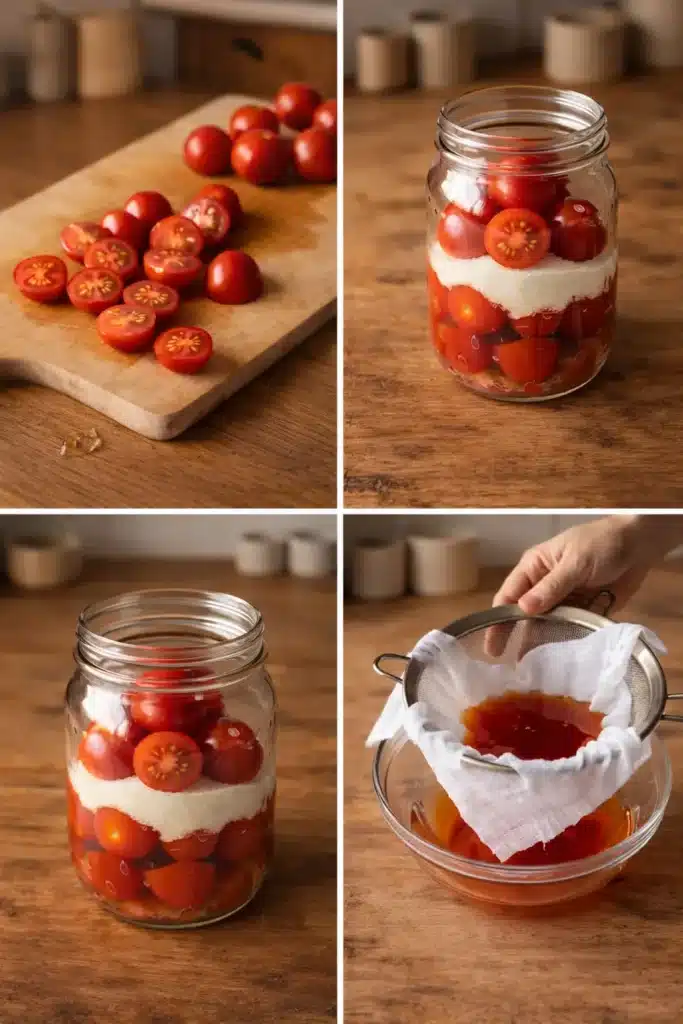
- Rinse and dry tomatoes thoroughly; remove stems and split spots.
- Sprinkle a spoon of sugar in the empty jar to start the juices.
- Add a layer of tomatoes, then a layer of sugar; repeat.
- Tap the jar to settle gaps; finish with sugar on top.
- Lid on. Rest at cool room temp 4–6 hours, then refrigerate.
- Day 1–2: tip the jar once or twice to help sugar dissolve.
- Day 2–3: most sugar is gone; fruit looks glossy and lighter.
Texture note: skins stay on, so fruit pieces are pleasantly bouncy. The syrup may show fine specks—normal for no-peel Korean Tomato Syrup and great for drinks.
Peeled Cherry Tomatoes Method (cleaner look, softer fruit)
Good for: clear syrup, elegant mocktails, toast with ricotta.
You’ll need (pint jar): clean jar, ice bath, small pot, 400 g tomatoes, 400 g sugar.
- Bring a small pot to a gentle simmer; set up an ice bath.
- Score a tiny “X” on each tomato. Blanch 10–20 seconds, then shock in ice.
- Slip off skins; pat tomatoes dry so the first sugar layer isn’t watered down.
- Layer: sugar → tomatoes → sugar; finish with sugar on top.
- Lid on. Rest 2–4 hours at cool room temp, then refrigerate.
- Tip the jar on Day 1–2 to dissolve any pockets.
- By Day 3, fruit is tender; the strained Korean Tomato Syrup looks especially clear.
Texture note: fruit becomes soft and spoonable; the syrup pours cleanly and strains easily.
Jar Prep & Daily Check-Ins
Jar prep: Wash in hot soapy water, rinse, and air-dry completely. For most home kitchens, this level of clean is enough. Use jars with tight lids to avoid leaks when tipping.
Daily rhythm:
- Morning or evening: tip the jar gently; don’t shake.
- Keep it cold: after the brief room-temp start, store in the fridge.
- Label: date + “no-peel” or “peeled” so you remember the path.
What you’ll see by day (typical):
| Checkpoint | What it looks like | What to do |
|---|---|---|
| 12 hours | Bottom layer liquefies; sugar crystals remain | Tip the jar gently |
| Day 2 | Most sugar gone; fruit glossy | Tip once; avoid shaking |
| Day 3 | Syrup level rises; fruit floats a bit | Decide to strain or keep macerating |
| Day 5–7 | Flavor deepens; syrup thickens slightly | Strain now for a clearer result |
Small bubbles along the glass are usually trapped air. Fluffy growth or strong off smells are not—move to the discard cues in Section 5.
When to Strain & How to Store Korean Tomato Syrup
When to strain:
- For drinks: strain on Day 2–3 for a bright, light syrup.
- For toast/yogurt: keep fruit in syrup until Day 3–5 for rounder flavor.
How to strain:
- Set a fine mesh strainer over a clean bowl or measuring cup.
- Pour in small batches; let gravity work (don’t press hard).
- Transfer syrup to a clean jar or bottle; chill promptly.
Storage:
- Keep syrup and fruit in the fridge with lids on.
- For the cleanest look and flavor, store strained Korean Tomato Syrup and fruit solids separately.
- See Section 5 for simple time windows and discard cues that fit everyday kitchens.
What’s Happening in the Jar? (Maceration vs. Fermentation, simply put)
In everyday cooking, it helps to know what this syrup is doing as it rests. Sugar draws moisture out of the tomatoes (that’s maceration). As the juices build, the sugar dissolves and you get a clear, rosy liquid. In some kitchens, mild fermentation can show up later—mostly as a little fizz when you open the lid. For this recipe, we keep things fridge-first so maceration stays in the lead and flavors remain bright.
Think of it this way: maceration makes syrup; time in the fridge refines it. If you prefer a cleaner taste for drinks, strain on Day 2–3. For toast or yogurt, let the fruit sit a bit longer so the pieces become softer and sweeter. The checks below keep the process simple and practical for home use.
Maceration, in plain terms
Sugar is hygroscopic—it attracts water. This hygroscopic property is a well-documented characteristic of sugar in food science and explains why fruit releases juice without heat, a principle commonly discussed in culinary science resources like Serious Eats.
When sugar touches cut or whole tomatoes, their juices move out to balance things. That’s why a dry jar slowly turns liquid without any cooking. Early on, you’ll see layers: crystals at the bottom, tomatoes in the middle, and a growing puddle of syrup.
Gentle tipping once or twice a day helps crystals dissolve without bruising the fruit. Temperature matters too. A brief room-temp start (a few hours) helps juices begin, then the fridge keeps the flavor fresh. Sugar’s role in drawing out moisture and limiting microbial activity has long been used in traditional preserves and is widely explained in food preservation guidance from sources like the National Center for Home Food Preservation.
If you like a lighter color and a cleaner pour, strain once most sugar is gone and store the syrup and fruit separately.
Fermentation: what it is and when to pause
With fruit and sugar, natural yeasts can create a little fizz over time. This mild activity is similar to early-stage fruit fermentation, a process described in food safety and fermentation overviews such as those from the USDA.
In a cold fridge and a clean jar, activity is usually minimal. Signs you might be drifting beyond a simple maceration: a sharp, wine-like smell, strong pressure on opening, or persistent bubbling in the cold. If you notice those, it’s best to strain, chill the syrup promptly, and use it soon—or start a fresh jar.
Cloudiness alone isn’t always a problem; it can come from fine tomato solids. What’s not OK: fuzzy growth, vivid surface films, or off smells. In those cases, discard the batch and wash the jar well before trying again. This is meant to be a short, fridge-friendly project, not a long ferment.
Simple checks that keep results steady
- Time windows: start in a cool spot for a few hours, then refrigerate. Decide on Day 2–3 whether to strain.
- Tipping, not shaking: move the jar gently so fruit stays intact and crystals dissolve.
- Clean tools only: use a clean spoon each time you dip in; re-lid promptly.
- Labeling helps: write the date and method (“no-peel” or “peeled”) so you can repeat the version you liked.

Storage, Timelines, and Food-Safety Basics for Korean Tomato Syrup
In everyday cooking, the safest path for Korean Tomato Syrup is fridge-first, clean tools, and clear labels. This isn’t a shelf-stable preserve; treat Korean Tomato Syrup like a fresh condiment you keep cold and finish within a sensible window.
Fridge storage at a glance (for Korean Tomato Syrup)
| Item | Where | Best by | Notes |
|---|---|---|---|
| Whole jar (fruit + syrup) | Fridge (≤4°C) | 7–10 days | Tip gently once a day; open briefly |
| Strained Korean Tomato Syrup | Fridge | 2–3 weeks | Transfer to a clean bottle; cap tightly |
| Fruit solids (after straining) | Fridge | 5–7 days | Spoon over yogurt/toast; use a clean utensil |
| Single-serve portion | Fridge | 24–48 hours | If mixing with citrus/herbs, use sooner |
Label jars with the date and method (“no-peel” or “peeled”). Small Korean Tomato Syrup batches are easier to finish on time.
When to strain Korean Tomato Syrup
- For drinks: strain on Day 2–3 for a bright, clean pour.
- For toast/yogurt: keep the fruit in syrup until Day 3–5 for softer pieces.
- After straining, store syrup and fruit separately for the neatest look and flavor.
Clean-handling habits that fit a normal routine
- Cold zone: keep Korean Tomato Syrup in the main body of the fridge, not the door.
- Clean spoons only: dip once, then wash. Avoid double-dipping.
- Short openings: open, pour, close. Less air time keeps flavors steady.
- Dry rims: wipe jar rims before closing to avoid sticky buildup.
Normal vs. not-okay signs
Normal for Korean Tomato Syrup:
- Fine specks from tomato skins (no-peel method)
- Light cloudiness from tiny solids
- Small trapped bubbles along the glass
Not okay — discard the batch:
- Fuzzy growth on top or along the sides
- Strong sour, wine-like, or off smells
- Bulging lid or pressure that hisses in the fridge
- Unusual colors or films that re-form after skimming
When in doubt, it’s better to start a fresh pint of Korean Tomato Syrup than keep a questionable jar.
Freezing (optional)
You can freeze strained Korean Tomato Syrup in small containers or silicone cubes for up to 2 months. Thaw in the fridge and give it a gentle stir before using. Avoid freezing the fruit pieces; texture turns mushy.
How to Use Korean Tomato Syrup: Drinks, Breakfast, and Savory Ideas
Korean Tomato Syrup is a flexible fridge helper. Keep a small bottle on hand and add it to drinks, breakfasts, or light savory dishes when you want sweet-tangy tomato notes without cooking a sauce.
Drinks: cafe-style “ade,” spritzers, and iced tea
Korean Tomato Syrup pairs easily with bubbles and citrus. Build in the glass with cold ingredients.
Base ade (1 glass)
- 2–3 tbsp Korean Tomato Syrup
- Ice + sparkling water to fill
- Optional: squeeze of lemon or lime
Tips
- For a stronger flavor, muddle 2–3 peeled tomato pieces from the jar before adding ice.
- For iced tea or lemonade, start with 1–2 tbsp syrup per cup, then adjust.
Quick table
| Drink | Syrup | Liquid | Notes |
|---|---|---|---|
| Sparkling ade | 2–3 tbsp | Sparkling water | Add citrus for brightness |
| Iced black tea | 1–2 tbsp | Strong chilled tea | Stir well over ice |
| Lemonade spritz | 2 tbsp | ½ cup lemonade + bubbles | Balance with an extra squeeze of lemon |
Breakfast & sweet snacks: yogurt bowls, toast, and pancakes
Yogurt bowl (1 serving)
- ½–¾ cup plain yogurt
- 1–2 tbsp Korean Tomato Syrup + a few tomato pieces
- Optional: chia or granola
Ricotta toast
- Toasted bread + ricotta
- Spoon Korean Tomato Syrup over the top; finish with a pinch of salt
Pancakes or waffles
- Warm a small amount of syrup briefly (just until fluid) and drizzle.
- If it tastes too sweet, cut with a few drops of lemon.
Light savory uses: vinaigrettes, glazes, and pan sauces
A small amount balances acidity and salt. Korean Tomato Syrup slips into dressings and glazes without turning dishes into dessert.
Everyday vinaigrette (salad for 2)
- 1 tbsp Korean Tomato Syrup
- 1 tbsp lemon juice or mild vinegar
- 2 tbsp olive oil + pinch of salt
- Shake in a jar; taste and adjust
Sheet-pan glaze (roasted veg)
- Toss hot roasted zucchini, carrots, or onions with 1–2 tsp syrup and a splash of soy sauce.
- Return to the oven 2–3 minutes to gloss.
Quick pan sauce (for chicken or tofu)
- After searing, deglaze with a small splash of water.
- Stir in 1–2 tsp syrup and a little soy; simmer 30–60 seconds until lightly thick.
Serving amounts at a glance
| Use | Starting amount of Korean Tomato Syrup |
|---|---|
| One drink (ade/spritzer) | 2–3 tbsp |
| Yogurt bowl | 1–2 tbsp |
| Ricotta toast | 1–1½ tbsp |
| Vinaigrette (serves 2) | 1 tbsp |
| Pan sauce/glaze | 1–2 tsp |
Adjust to taste; tomatoes vary batch to batch. If sweetness runs high, add lemon juice or a splash of the jar’s tomato juices.
Variations: Basil, Citrus, and Low-Sugar Options
Small tweaks keep Korean Tomato Syrup interesting without changing the core method. Keep add-ins light so the tomato flavor stays front and center. If you’re testing more than one idea, split a pint into two half-pints and label each jar.
Basil or Herb Notes (fresh, not overpowering)
How much: 1 small basil leaf (or 2 small mint leaves) per pint.
When to add: Layer the herb near the top so it perfumes the jar without getting buried.
Flavor impact: Gentle herbal lift that works well in ades and yogurt bowls.
Tip: If the basil turns dark, strain the syrup and infuse a single glass instead (muddle a fresh leaf in the cup with syrup).
Alternative herbs (same light touch): lemon verbena, Thai basil, or a short ribbon of shiso. Avoid woody stems that can taste bitter over time.
Citrus Lift (brighter, slightly less sweet)
How much:
- Lemon slice: 1 thin slice per pint, seeds removed
- Lemon juice: ½ teaspoon per pint (or to taste after straining)
When to add: Tuck a slice just under the top sugar layer, or add juice only after straining for the cleanest look.
Flavor impact: Adds sparkle and trims perceived sweetness without hiding the tomatoes.
Tip: For a café-style drink base, finish strained syrup with a tiny pinch of fine salt—just enough to round edges.
Low-Sugar and Honey Options (what changes)
Lower sugar: You can go down to ¾:1 sugar:tomato by weight.
- Upsides: Softer sweetness, fruit taste pops.
- Trade-offs: Slower dissolving, cloudier syrup, and a shorter fridge window. Aim to strain by Day 2–3 and use promptly.
Partial honey swap: Replace 25–30% of the sugar with mild honey.
- Upsides: Floral aroma, smooth mouthfeel.
- Trade-offs: Slight haze and a shorter storage time. Keep it cold and plan to use within 1–2 weeks once strained.
Not recommended: Full honey or very low sugar (½:1 or less). Texture and keeping quality drop quickly, and flavor can skew.
Warm-Spice & Savory Ideas (use sparingly)
Warm spice: 1–2 thin coins of fresh ginger or a tiny pinch of ground cardamom per pint. Strain by Day 2 for a clean profile.
Savory hint: 2–3 drops of good soy sauce whisked into a single serving of strained syrup (great for pan sauces and glazes). Don’t add soy to the jar.
Variation Quick Table
| Variation | Add-in | Amount (per pint) | When to add | Notes |
|---|---|---|---|---|
| Basil | Fresh basil leaf | 1 small | During layering | Perfume only; remove if color dulls |
| Citrus slice | Lemon | 1 thin slice | During layering | Seedless; brightens drinks |
| Citrus juice | Lemon juice | ½ tsp | After straining | Clears flavor, no cloudiness |
| Lower sugar | Sugar ↓ | ¾× tomato weight | Start of recipe | Use sooner; strain by Day 2–3 |
| Partial honey | Honey | 25–30% of sugar | Start of recipe | Slight haze; shorter storage |
| Ginger | Fresh ginger | 1–2 thin coins | During layering | Strain early for balance |
Keep the base plain the first time. On your second batch, choose one variation so you can taste the difference clearly. If sweetness runs high, add a few drops of lemon juice to the glass or blend in a spoon of the jar’s tomato juices for balance.
Troubleshooting: Floating Fruit, Too Sweet, Too Tart, Cloudy Syrup
Small hiccups are common and easy to fix. Use the tables below to spot what’s normal and what needs a quick tweak for Korean Tomato Syrup.
Quick diagnosis table
| Symptom | Likely cause | Simple fix |
|---|---|---|
| Fruit floating high | Air trapped in layers; light fruits | Tip the jar gently 2–3 times; press fruit down lightly with a clean spoon before resealing |
| Sugar not dissolving | Layers packed too tightly; fridge too cold | Let sit 30–60 min at cool room temp, then tip; check your 1:1 ratio |
| Syrup tastes too sweet | Tomatoes less ripe; high sugar-to-juice | Add ½–1 tsp lemon juice to the glass; or blend a spoon of jar juices into the serving |
| Syrup tastes too tart | Very acidic tomatoes | Stir in ½–1 tsp additional syrup to the glass; next batch, choose riper tomatoes |
| Cloudy syrup | Fine solids; honey swap | Strain through a fine mesh or coffee filter; store syrup and fruit separately |
| Fine bubbles at the sides | Trapped air, light activity | Keep cold and use soon; if smell turns sharp or lid pressures, discard |
Floating fruit or stubborn sugar
Why it happens: Tomatoes hold air, and tight packing leaves pockets where sugar can clump.
What to do now
- Tip the jar gently, don’t shake.
- If needed, pop the lid, press fruit down lightly with a clean spoon, reseal.
- Let the jar sit at cool room temp 30–60 minutes, then return to the fridge.
Next time
- Layer evenly; finish with a thin sugar cap.
- Check the 1:1 ratio so there’s enough juice to dissolve sugar for Korean Tomato Syrup.
Too sweet or too tart
Too sweet (glass-level fixes)
- Stir in a squeeze of lemon or a spoon of strained tomato juices.
- For drinks, add a splash more sparkling water or tea.
Too tart
- Add ½–1 teaspoon more syrup to the glass.
- For the next batch, choose riper cherry tomatoes or wait an extra day before straining.
Tomato acidity varies by ripeness and variety, which is why sweetness balance can shift batch to batch—a detail often noted in produce guides from Bon Appétit.
Cloudy syrup or specks
Cloudy: Usually fine solids, especially with no-peel or partial honey batches.
Fix: Strain once through a fine mesh; for extra clarity, line the strainer with a coffee filter and let gravity work.
Specks: Tiny skin bits from the no-peel method.
Fix: Harmless; if you want a clearer look for mocktails, strain again and bottle the Korean Tomato Syrup separately from the fruit.
When to stop and discard
- Fuzzy growth on top or along the sides
- Strong sour or wine-like smell in the fridge
- Bulging lid or notable hiss on opening
- Colors or films that reappear after skimming
If any of these show up, discard and wash the jar well before starting a fresh pint of Korean Tomato Syrup.
FAQs
Why do Koreans drink tomato juice?
It’s popular in cafes and at home because it’s refreshing, lightly sweet–tangy, and pairs well with ice and citrus. You’ll also see tomato used in Korean “ade” drinks and in cheong (fruit syrups) stirred into sparkling water. Taste and café culture drive it more than health claims in everyday use in South Korea.
What is the Korean syrup?
When people say “Korean syrup” here, they usually mean cheong (청)—fruit layered with sugar until it releases a natural syrup. It’s uncooked, kept in the fridge, and used for drinks, toast, yogurt, and simple sauces.
How to make tomato syrup?
Tomato cheong is the simple route:
Rinse and dry cherry tomatoes.
Layer equal weights of tomatoes and sugar in a clean jar, finishing with sugar on top.
Rest a few hours cool room temp, then refrigerate.
Tip the jar daily; when most sugar dissolves (Day 2–3), strain for clear syrup. Keep cold.
What is a cheong?
Cheong is a no-cook fruit syrup made by macerating fruit with sugar. The sugar pulls out juices, creating a flavored syrup while leaving spoonable fruit pieces.
What is the difference between cheong and syrup?
“Syrup” is a broad term for a sweet liquid (any method). Cheong is a specific, no-cook, fruit-plus-sugar method that makes syrup and leaves fruit pieces. It’s typically mixed into drinks or spooned over foods and stored in the fridge.
Final thoughts
Keep Korean Tomato Syrup simple: small jars, clean tools, and a fridge-first mindset. Make one plain batch, then try a single variation so you can taste the difference clearly. For background and inspiration, here’s a friendly primer from Bon Appétit: Two-Ingredient Tomato Cheong.





Pingback: TikTok Coffee Bucket Recipe (2026) : Ratios, Swirl, Party Tips
Pingback: Banana Coffee Drinks (2026): 1–1–1 Base + 5 Easy Recipes
Pingback: Bariatric Seed Recipe for Weight Loss: Easy 5-Minute Mix
Pingback: Strawberry Pasta Recipe – Easy Polish Makaron z Truskawkami
Pingback: Lavender Matcha Latte Recipe (Hot or Iced) in 5 Minutes