
Does Hydration Help With Weight Loss?
Hydration and weight loss are connected through appetite regulation, energy balance awareness, and fluid stability — not direct fat burning. Drinking enough water may help reduce mistaken hunger signals and support calorie control, but hydration alone does not increase metabolism or cause fat loss.
This distinction is essential.
According to the Harvard T.H. Chan School of Public Health, sustainable weight loss is driven primarily by long-term energy balance — calories consumed versus calories expended. Water supports physiological processes, but it does not override this principle.
Similarly, the National Academies of Sciences, Engineering, and Medicine provide guidance on adequate daily fluid intake, emphasizing hydration for normal bodily function — not for direct fat reduction.
So where do hydration and weight loss actually intersect?
There are three evidence-supported mechanisms:
1. Appetite Regulation
Mild dehydration can sometimes be perceived as hunger. Drinking water before eating may improve appetite awareness, helping reduce unnecessary calorie intake.
2. Beverage Substitution
Replacing calorie-dense drinks (sodas, sweetened coffees, juices) with water reduces total daily calorie intake. This behavioral shift — not the water itself — can contribute to weight change over time.
3. Energy & Physical Activity Support
Proper hydration supports circulation, thermoregulation, and muscle function. These processes allow normal physical activity, which influences energy expenditure.
The key takeaway:
Hydration supports physiology.
Energy balance determines fat loss.
For a deeper behavioral perspective on stress and appetite patterns, see lemon balm weight loss benefits.
If you’re exploring electrolyte-based hydration strategies, review pink salt weight loss guide.
For a broader overview of beverage-based weight strategies, visit natural weight loss drinks explained.
This guide examines hydration and weight loss through a scientific lens — separating metabolic myths from measurable mechanisms.

The Science of Hydration and Body Weight
Hydration and weight loss are often confused because short-term scale changes are frequently related to fluid shifts — not fat loss.
Understanding the difference between water weight and body fat is essential.
Water Weight vs Fat: What’s the Difference?
Water weight refers to temporary fluid retention in tissues. Fat gain reflects stored excess energy over time.
Water weight can fluctuate daily based on:
- Sodium intake
- Carbohydrate intake
- Hormonal changes
- Stress levels
- Exercise recovery
Body fat, by contrast, changes gradually and requires sustained calorie surplus or deficit.
According to the National Institutes of Health Office of Dietary Supplements, sodium plays a major role in regulating fluid balance inside and outside cells. When sodium intake increases, the body may temporarily retain more fluid.
Similarly, the American Heart Association explains that higher sodium intake can influence fluid retention, which may temporarily increase scale weight without reflecting fat gain.
This is why hydration and weight loss discussions often become misleading.
A drop of 2–3 pounds in a few days is usually:
✔ Reduced glycogen storage
✔ Reduced sodium intake
✔ Reduced water retention
It is rarely pure fat loss.
How Glycogen and Water Interact
Carbohydrates are stored in the body as glycogen. For every gram of glycogen stored, the body retains approximately 3–4 grams of water.
When carbohydrate intake drops:
- Glycogen stores decrease
- Associated water is released
- Scale weight falls
This is fluid movement — not direct fat reduction.
That is why early changes in hydration and weight loss routines often look dramatic at first.
Why Hydration Still Matters
Proper hydration supports:
✔ Circulation
✔ Thermoregulation
✔ Nutrient transport
✔ Muscle function
The Centers for Disease Control and Prevention (CDC) emphasize that adequate hydration supports overall physiological stability, particularly during physical activity.
Stable hydration supports consistent energy levels.
Consistent energy supports physical activity.
Physical activity influences energy expenditure.
Hydration supports the system — but it does not directly burn fat.
Where Misinterpretation Happens
The confusion around hydration and weight loss often comes from:
Rapid scale fluctuations
Post-sodium bloating
Low-carb diet transitions
Sweat loss after workouts
These are fluid shifts, not fat oxidation.
For context on sodium-related hydration strategies, see pink salt weight loss guide.
For behavioral appetite context, read lemon balm weight loss benefits.
Key Takeaway
Water weight changes quickly.
Fat mass changes slowly.
Hydration influences the first — not the second.
Can Drinking More Water Increase Metabolism?
Drinking water may slightly increase energy expenditure for a short period, but the effect is small and not significant enough to cause meaningful fat loss on its own. When discussing hydration and weight loss, this is one of the most misunderstood claims.
The Thermogenic Effect of Water
Some studies suggest that drinking water — especially cold water — can temporarily increase resting energy expenditure. This is sometimes called water-induced thermogenesis.
The idea is simple:
Your body uses energy to bring cold water to body temperature.
However, the increase in calorie burn is modest and does not meaningfully alter long-term hydration and weight loss outcomes.
A review indexed in PubMed examining water-induced thermogenesis found that while energy expenditure may rise temporarily, the total calorie impact is relatively small in practical terms.
In most cases, the additional calories burned amount to only a few extra calories per glass — not enough to drive measurable hydration and weight loss changes.
Metabolism: What Actually Influences It?
Metabolic rate is primarily influenced by:
- Lean muscle mass
- Hormonal balance
- Age
- Physical activity
- Total calorie intake
According to the Mayo Clinic, metabolism is largely determined by body composition and activity level — not hydration alone.
Hydration supports these systems, but hydration and weight loss remain connected through behavior and physiology — not metabolic acceleration.
Where the Confusion Starts
Hydration and weight loss are often grouped together because:
✔ People feel more energized when hydrated
✔ They may snack less when drinking water first
✔ They replace calorie-dense drinks
These behavioral changes influence energy balance.
The metabolic increase from water itself is minor.
The Real Role of Hydration in Energy Balance
Hydration helps maintain:
- Blood volume
- Circulation
- Muscle function
- Exercise tolerance
When performance improves, physical activity may increase — and that can influence hydration and weight loss progress indirectly.
Hydration supports the system.
Energy balance drives fat loss.
Hydration, Hunger & Appetite Signals
Can Dehydration Feel Like Hunger?
Yes, mild dehydration can sometimes be misinterpreted as hunger. This is one of the most practical ways hydration and weight loss intersect.
The body regulates thirst and hunger through overlapping neurological pathways. When fluid levels drop slightly, the brain may send signals that feel similar to hunger cues.
This does not mean dehydration “causes” weight gain.
It means appetite perception can become less precise.
Why This Matters for Hydration and Weight Loss
When someone is mildly dehydrated, they may:
- Snack unnecessarily
- Crave quick-energy foods
- Feel fatigue mistaken for hunger
- Eat earlier than needed
Drinking water first can sometimes clarify whether the body needs fluid or food.
According to research discussed by Harvard Health Publishing, thirst cues may be weaker in some individuals, which can lead to confusion between hunger and hydration needs.
This is a behavioral connection — not a metabolic one.
Hydration supports appetite awareness.
Appetite awareness supports calorie control.
Calorie control influences long-term weight outcomes.
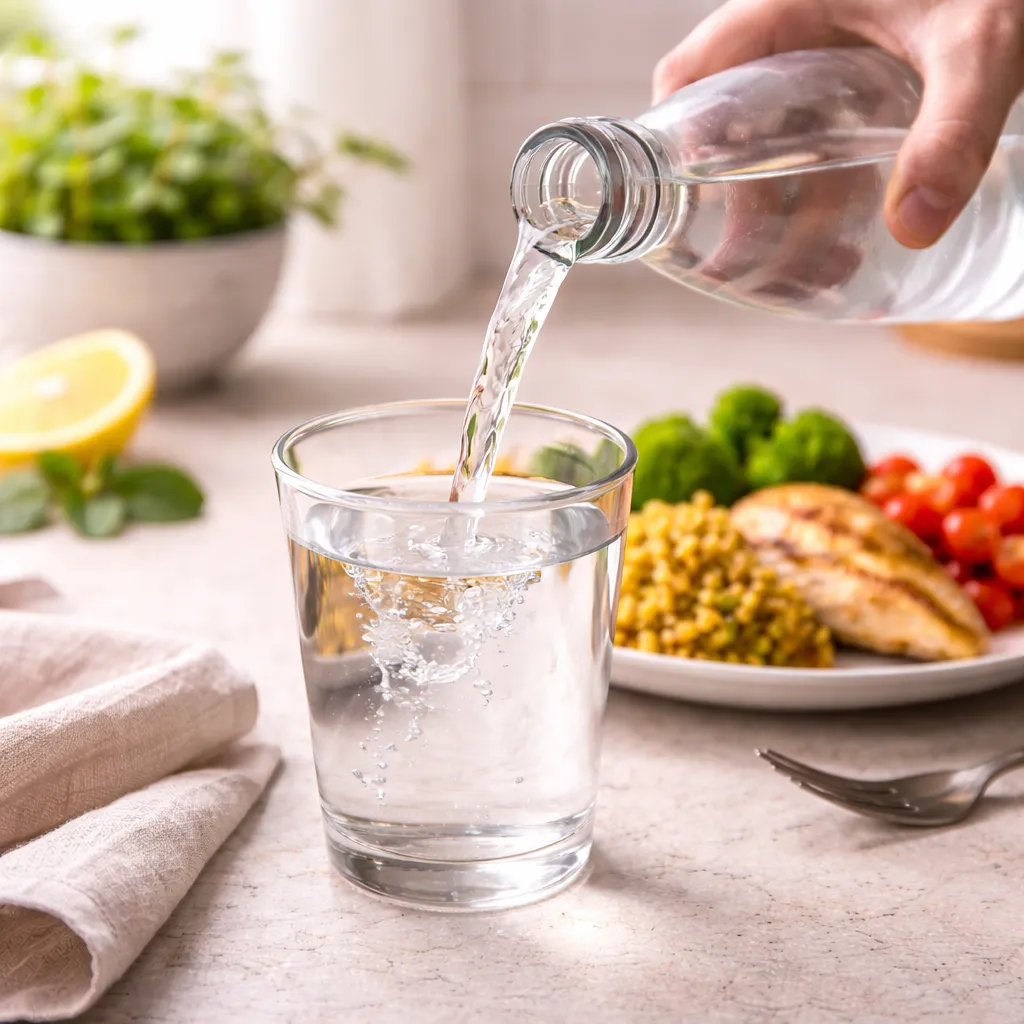
The Pre-Meal Water Strategy
Some studies have examined drinking water before meals.
Findings suggest that consuming water prior to eating may:
✔ Increase fullness perception
✔ Reduce immediate calorie intake
✔ Support portion awareness
A study indexed on PubMed found that pre-meal water consumption may contribute to reduced calorie intake in certain populations.
However, the effect is moderate and works best when paired with structured eating habits.
Hydration and weight loss connect here through behavior — not fat-burning chemistry.
Important Clarification
Drinking water will not:
✘ Suppress appetite permanently
✘ Override hormonal regulation
✘ Eliminate emotional eating
It may simply improve signal clarity.
For stress-related appetite patterns, see lemon balm weight loss benefits.
For beverage strategy comparisons, review natural weight loss drinks explained.
Key Takeaway
Hydration improves appetite awareness.
Appetite awareness improves decision-making.
Decision-making influences energy balance.
That is the real relationship between hydration and weight loss.
Water Retention vs Fat Gain (Why the Scale Fluctuates)
Water retention is temporary fluid accumulation. Fat gain reflects stored excess energy over time. They are not the same.
This distinction is critical when discussing hydration and weight loss.
Many people assume a 2–4 pound increase on the scale means fat gain. In reality, short-term weight changes are usually fluid-related.
What Causes Water Retention?
Water retention can increase due to:
- Higher sodium intake
- Increased carbohydrate intake
- Hormonal shifts
- Stress
- Inflammation from exercise
According to the American Heart Association, sodium influences how the body regulates fluid balance. Higher sodium intake can temporarily increase fluid retention.
This is fluid — not fat.
The Carbohydrate Connection
Carbohydrates are stored as glycogen in muscles and the liver.
For every gram of glycogen stored, the body retains approximately 3–4 grams of water.
When carbohydrate intake increases:
- Glycogen stores increase
- Water retention increases
- Scale weight rises
When carbohydrate intake drops:
- Glycogen decreases
- Stored water is released
- Scale weight falls
This is one reason early changes in hydration and weight loss routines may appear dramatic — especially in the first week.
It is mostly fluid movement.
How Stress Affects Water Balance
Stress increases cortisol levels. Elevated cortisol can influence:
- Fluid retention
- Sodium handling
- Appetite patterns
While hydration supports physiological stability, it does not eliminate hormonally driven fluid shifts.
For a stress-related behavioral perspective, see lemon balm weight loss benefits.
How to Tell the Difference Between Water and Fat
Water weight:
✔ Changes quickly (1–5 lbs in days)
✔ Fluctuates daily
✔ Often linked to diet shifts
Fat gain:
✔ Accumulates slowly
✔ Requires sustained calorie surplus
✔ Does not disappear overnight
This is why hydration and weight loss discussions must separate short-term scale shifts from long-term body composition changes.
Why This Matters
If someone increases water intake and sees a slight weight increase, it does not mean hydration is “causing weight gain.”
It may reflect:
- Glycogen restoration
- Sodium balance shifts
- Normal fluid redistribution
Hydration supports stability — but daily scale movement is largely fluid-based.
For electrolyte-focused hydration trends, review pink salt weight loss guide.
Key Takeaway
Water weight fluctuates.
Fat mass changes gradually.
Hydration influences fluid balance — not fat storage.
Understanding this prevents false conclusions about hydration and weight loss progress.
Do Electrolytes Help With Weight Loss?
Electrolytes support fluid balance and muscle function, but they do not directly cause fat loss. The relationship between hydration and weight loss sometimes gets blurred when electrolyte drinks are marketed as metabolism boosters.
Electrolytes include:
- Sodium
- Potassium
- Magnesium
- Chloride
Their primary function is regulating fluid movement inside and outside cells.
What Electrolytes Actually Do
According to the National Institutes of Health Office of Dietary Supplements, sodium and other electrolytes are essential for nerve transmission, muscle contraction, and maintaining fluid balance.
Source:
Electrolytes:
✔ Maintain hydration
✔ Support circulation
✔ Help regulate blood pressure
✔ Prevent dehydration during heavy sweating
They do not:
✘ Increase resting metabolic rate
✘ Trigger fat oxidation
✘ Override calorie balance
Hydration and weight loss intersect here through physiological stability — not fat burning.
Why Electrolyte Drinks Became Linked to Weight Loss
Electrolyte-based drinks gained popularity in:
- Fasting communities
- Low-carb diets
- Morning ritual trends
- Social media “detox” culture
The reasoning often goes:
Better hydration →Better metabolism →Faster fat loss
But metabolism is primarily influenced by body composition, hormones, and total energy intake — not sodium levels.
When Electrolytes Actually Matter
Electrolytes can be useful for:
✔ Long endurance workouts
✔ High heat environments
✔ Heavy sweating
✔ Certain medical conditions (under supervision)
For the average sedentary adult consuming a balanced diet, additional electrolyte loading is usually unnecessary.
The Harvard T.H. Chan School of Public Health emphasizes that most people already consume sufficient sodium — often exceeding recommended limits.
This is important when discussing hydration and weight loss, because excess sodium can increase temporary water retention.
Pink Salt & Electrolyte Trends
Pink Himalayan salt is frequently marketed as a “mineral-rich fat-loss enhancer.”
In reality:
It is primarily sodium chloride.
Trace minerals exist in small amounts.
It behaves physiologically like other salts.
For a deeper breakdown of sodium-based hydration trends, see pink salt weight loss guide.
If you want the viral formulation explanation, review pink salt trick recipe.
The Real Connection
Electrolytes support hydration.
Hydration supports physical function.
Physical function supports activity.
Activity influences calorie expenditure.
That is the complete chain.
Electrolytes do not independently drive hydration and weight loss.
Key Takeaway
Electrolytes maintain balance.
They do not accelerate fat burning.
Their role in hydration and weight loss is supportive — not causal.
Best Hydration Strategy for Weight Management
Hydration and weight loss are connected through structure and consistency — not shortcuts. The most effective hydration strategy supports appetite awareness, physical activity, and beverage control.
Here is what actually works.
1. Start the Day With Water
After 6–8 hours of sleep, mild dehydration is normal.
Drinking water upon waking may:
✔ Improve alertness
✔ Reduce immediate caffeine dependence
✔ Clarify early hunger signals
This supports hydration and weight loss indirectly by stabilizing morning eating patterns.
For herbal morning options, see lemon balm recipe for weight loss.
2. Drink Water Before Meals
Consuming water 15–30 minutes before meals may increase fullness perception and help portion awareness.
As discussed earlier, some research indexed on PubMed suggests pre-meal water consumption may modestly reduce immediate calorie intake in certain populations.
This strategy works through appetite awareness — not fat burning.
Hydration supports portion control.
Portion control supports energy balance.
Energy balance drives weight change.
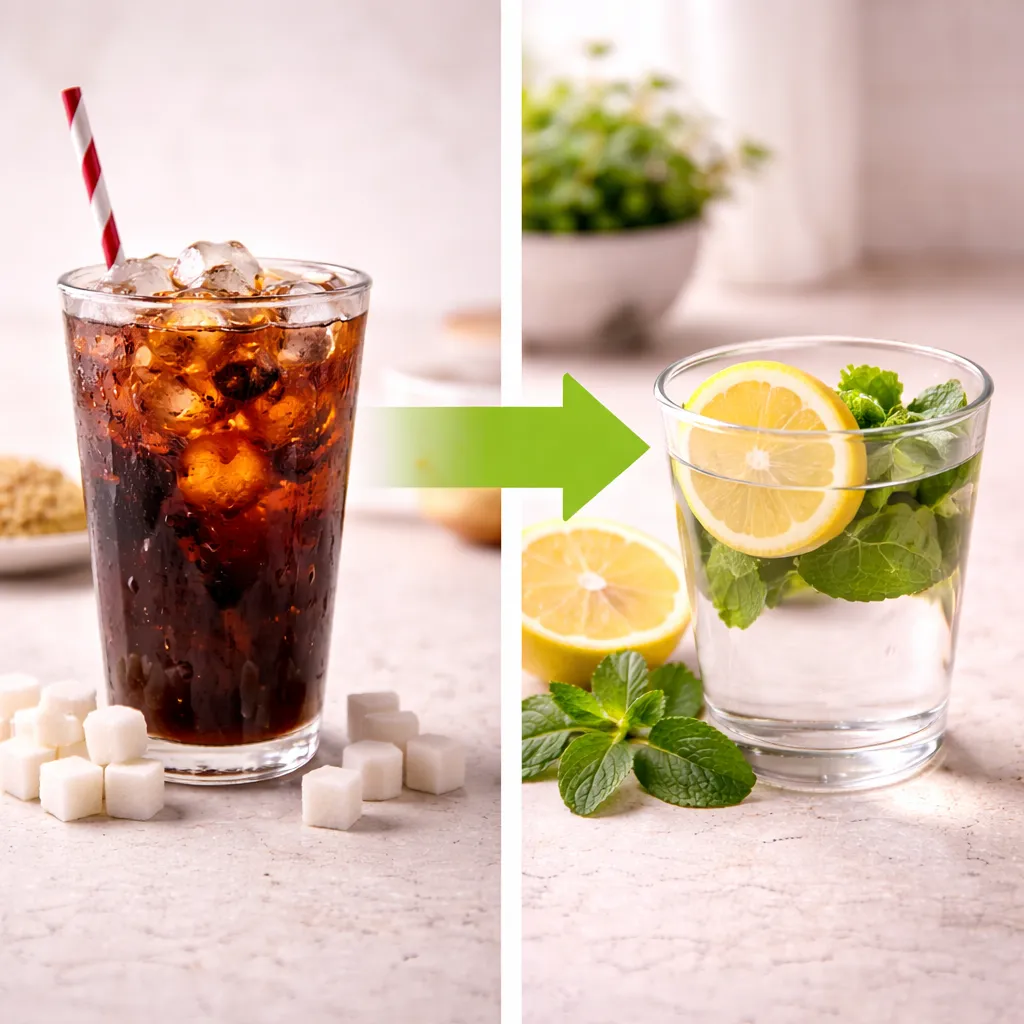
3. Replace Liquid Calories
One of the strongest links between hydration and weight loss is beverage substitution.
Replacing:
- Sugary sodas
- Sweetened coffees
- Juice drinks
- Energy beverages
With water can significantly reduce daily calorie intake.
According to the Centers for Disease Control and Prevention (CDC), choosing water instead of sugar-sweetened beverages can support healthy weight management.
Source:
This is a behavioral effect — not a metabolic one.
4. Monitor Urine Color (Simple Indicator)
A practical hydration indicator is urine color.
Pale yellow generally indicates adequate hydration.
Dark yellow may signal insufficient fluid intake.
While not a perfect measure, it offers a simple daily feedback tool.
Hydration consistency supports physical performance and routine stability — both relevant to hydration and weight loss outcomes.
5. Avoid Overhydration
More is not always better.
Excessive water intake can dilute sodium levels and lead to hyponatremia, a potentially serious condition.
The Mayo Clinic explains that overhydration can disrupt electrolyte balance.
Hydration should support balance — not excess.
What an Evidence-Based Routine Looks Like
✔ 1 glass upon waking
✔ Water before meals
✔ Water during physical activity
✔ Replace sugary drinks
✔ Adjust intake for climate and exercise
Hydration and weight loss work best when hydration supports behavior — not when it becomes a gimmick.
For electrolyte-based hydration trends, see pink salt weight loss guide.
For a broader beverage comparison overview, review natural weight loss drinks explained.
Bottom Line
Hydration supports appetite awareness.
Hydration supports activity.
Hydration supports structure.
But fat loss still depends on sustained calorie balance.
Hydration and weight loss are connected — just not in the way marketing headlines suggest.
Common Myths About Hydration and Weight Loss
Hydration and weight loss are frequently linked in headlines, but many claims exaggerate what water can actually do. Let’s separate common myths from measurable physiology.
Myth 1: Drinking a Gallon of Water a Day Melts Fat
There is no evidence that consuming large amounts of water directly increases fat oxidation.
Hydration supports normal metabolic function, but metabolism is primarily influenced by:
- Lean muscle mass
- Hormonal balance
- Physical activity
- Total calorie intake
Excessive water intake does not accelerate fat loss — and may even disrupt electrolyte balance if extreme.
Hydration and weight loss are connected through behavior, not volume extremes.
Myth 2: Cold Water Burns Significant Calories
It is true that the body expends a small amount of energy warming cold water to body temperature.
However, the thermogenic effect is minimal — typically only a few additional calories per glass.
This is not enough to create meaningful hydration and weight loss changes over time.
The effect exists — but it is small.
Myth 3: Electrolyte Water Boosts Metabolism
Electrolytes regulate fluid balance and muscle contraction. They do not independently increase metabolic rate.
According to the National Institutes of Health Office of Dietary Supplements, sodium’s primary role is fluid regulation — not fat metabolism.
Electrolytes support hydration.
They do not trigger fat burning.
For sodium-based hydration trends, see pink salt weight loss guide.
Myth 4: Water Detoxes Body Fat
The body’s detoxification systems are primarily:
- The liver
- The kidneys
- The gastrointestinal tract
Water supports kidney function, but it does not flush stored fat from cells.
Fat loss occurs when stored energy is mobilized through sustained calorie deficit — not through increased fluid intake.
Hydration supports physiological function.
It does not “detox” adipose tissue.
Myth 5: If the Scale Drops After Drinking More Water, You Lost Fat
Early drops on the scale after hydration changes often reflect:
✔ Reduced sodium
✔ Reduced glycogen
✔ Temporary fluid shifts
This is water weight — not fat mass reduction.
Hydration and weight loss must be evaluated over weeks and months, not days.
Why Myth-Busting Matters
Misinformation around hydration can:
- Create unrealistic expectations
- Encourage extreme behaviors
- Undermine long-term consistency
Understanding the real relationship between hydration and weight loss protects both results and health.
Core Truth
Hydration improves:
✔ Appetite awareness
✔ Physical performance
✔ Beverage quality
✔ Routine consistency
Fat loss still depends on energy balance.
Common Myths About Hydration and Weight Loss
Hydration and weight loss are frequently linked in headlines, but many claims exaggerate what water can actually do. Let’s separate common myths from measurable physiology.
Myth 1: Drinking a Gallon of Water a Day Melts Fat
There is no evidence that consuming large amounts of water directly increases fat oxidation.
Hydration supports normal metabolic function, but metabolism is primarily influenced by:
- Lean muscle mass
- Hormonal balance
- Physical activity
- Total calorie intake
Excessive water intake does not accelerate fat loss — and may even disrupt electrolyte balance if extreme.
Hydration and weight loss are connected through behavior, not volume extremes.
Myth 2: Cold Water Burns Significant Calories
It is true that the body expends a small amount of energy warming cold water to body temperature.
However, the thermogenic effect is minimal — typically only a few additional calories per glass.
This is not enough to create meaningful hydration and weight loss changes over time.
The effect exists — but it is small.
Myth 3: Electrolyte Water Boosts Metabolism
Electrolytes regulate fluid balance and muscle contraction. They do not independently increase metabolic rate.
According to the National Institutes of Health Office of Dietary Supplements, sodium’s primary role is fluid regulation — not fat metabolism.
Electrolytes support hydration.
They do not trigger fat burning.
For sodium-based hydration trends, see pink salt weight loss guide.
Myth 4: Water Detoxes Body Fat
The body’s detoxification systems are primarily:
- The liver
- The kidneys
- The gastrointestinal tract
Water supports kidney function, but it does not flush stored fat from cells.
Fat loss occurs when stored energy is mobilized through sustained calorie deficit — not through increased fluid intake.
Hydration supports physiological function.
It does not “detox” adipose tissue.
Myth 5: If the Scale Drops After Drinking More Water, You Lost Fat
Early drops on the scale after hydration changes often reflect:
✔ Reduced sodium
✔ Reduced glycogen
✔ Temporary fluid shifts
This is water weight — not fat mass reduction.
Hydration and weight loss must be evaluated over weeks and months, not days.
Why Myth-Busting Matters
Misinformation around hydration can:
- Create unrealistic expectations
- Encourage extreme behaviors
- Undermine long-term consistency
Understanding the real relationship between hydration and weight loss protects both results and health.
Core Truth
Hydration improves:
✔ Appetite awareness
✔ Physical performance
✔ Beverage quality
✔ Routine consistency
Fat loss still depends on energy balance.
FAQ – Hydration and Weight Loss
Does drinking more water help you lose weight?
Hydration and weight loss are connected through appetite awareness and beverage substitution, not direct fat burning. Drinking water may help reduce mistaken hunger signals and lower calorie intake if it replaces sugary drinks. However, hydration alone does not increase metabolism or cause fat loss without dietary changes.
How much water should I drink to lose weight?
There is no specific water amount that guarantees weight loss. General hydration guidelines vary by body size, climate, and activity level. Hydration and weight loss improve when water supports appetite regulation and replaces high-calorie beverages — not when intake is excessive.
For individual needs, consult general fluid guidance from the National Academies of Sciences.
Can drinking water reduce belly fat?
No. Hydration does not target belly fat specifically. Spot reduction is not supported by physiology. Fat loss occurs systemically when sustained calorie balance shifts over time. Hydration and weight loss connect through behavior, not targeted fat removal.
Does water boost metabolism?
Water may cause a small, temporary increase in energy expenditure (thermogenesis), but the effect is minor. Hydration supports metabolic processes, but it does not significantly increase resting metabolic rate or independently drive fat loss.
Can dehydration slow weight loss?
Severe dehydration can reduce physical performance and energy levels, which may indirectly affect activity and calorie expenditure. However, hydration and weight loss are most strongly connected through behavioral patterns rather than direct metabolic changes.
Is electrolyte water better for weight loss?
Electrolytes support fluid balance and muscle function. They do not directly increase fat burning. For most individuals with a balanced diet, additional electrolyte loading is unnecessary for hydration and weight loss purposes.
For more on sodium-based hydration trends, see pink salt weight loss guide.
Does drinking water before meals help?
Drinking water before meals may increase fullness perception and help reduce immediate calorie intake in some individuals. This can support hydration and weight loss through portion awareness — not through metabolic acceleration.
What is the safest way to use hydration for weight management?
✔ Drink consistently throughout the day
✔ Replace calorie-dense beverages
✔ Monitor thirst cues
✔ Adjust for exercise and climate
✔ Avoid extreme overhydration
Hydration supports healthy systems.
Energy balance determines fat loss.
Final Thoughts: The Real Relationship Between Hydration and Weight Loss
Hydration and weight loss are connected — but not through metabolic shortcuts.
Water does not melt fat.
Electrolytes do not override calorie balance.
Cold water does not meaningfully boost metabolism.
What hydration does support is stability.
Hydration improves:
✔ Appetite clarity
✔ Physical performance
✔ Energy levels
✔ Beverage quality
✔ Routine consistency
Those factors influence behavior.
And behavior determines long-term results.
The Simple Formula
Hydration supports the body.
Structure supports habits.
Habits influence energy balance.
Energy balance drives fat loss.
That is the complete physiological pathway linking hydration and weight loss.
When viewed through that lens, hydration becomes a foundational support tool — not a miracle intervention.
Where This Fits in Your Weight Strategy
Hydration and weight loss work best when combined with:
- Balanced nutrition
- Protein adequacy
- Strength training
- Sleep consistency
- Stress management
Water enhances these systems.
It does not replace them.
If You Want to Go Deeper
For behavioral appetite support, see
→ Lemon balm weight loss benefits
For sodium and electrolyte trends, explore
→ Pink salt weight loss guide
For a broader beverage strategy overview, read
→ Natural weight loss drinks explained
Each page strengthens your understanding of hydration and weight loss from a different angle.
The Bottom Line
Hydration and weight loss are connected through consistency — not chemistry.
Water supports function.
Function supports activity.
Activity supports energy balance.
And energy balance determines long-term change.
Approach hydration as a foundation — not a fix.
This content is for informational purposes only and does not replace medical advice. Consult your physician or a qualified healthcare professional before making any changes to your diet, supplement routine, or weight-management plan.