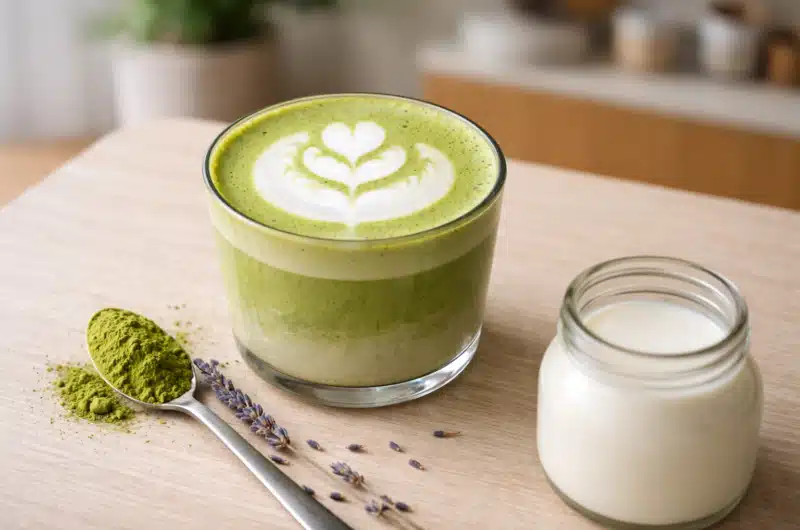
What is a lavender matcha latte?
Lavender matcha latte is a simple matcha latte lightly sweetened with lavender syrup. I whisk matcha with warm (not boiling) water until smooth, add milk, then stir in a small amount of syrup so the flavor stays gentle, not perfumey.
When I make a lavender matcha latte at home, I get a creamy cup with soft, vanilla-like floral notes over matcha’s fresh, green finish. The lavender stays in the background—balanced and sip-friendly.
Why I make it at home
- I control sweetness, starting small and adding ½–1 tsp more syrup only if needed.
- I pick the milk: dairy for fuller body, oat for extra creaminess, almond for lighter.
- I choose hot or iced without changing the base method.
Tools I actually use
- A small whisk (bamboo or regular) or a jar with a tight lid
- A fine mesh sieve to prevent clumps
- A mug or glass; ice for iced
Hot vs iced at a glance
- Hot: I whisk matcha with warm water, heat the milk, then sweeten to taste.
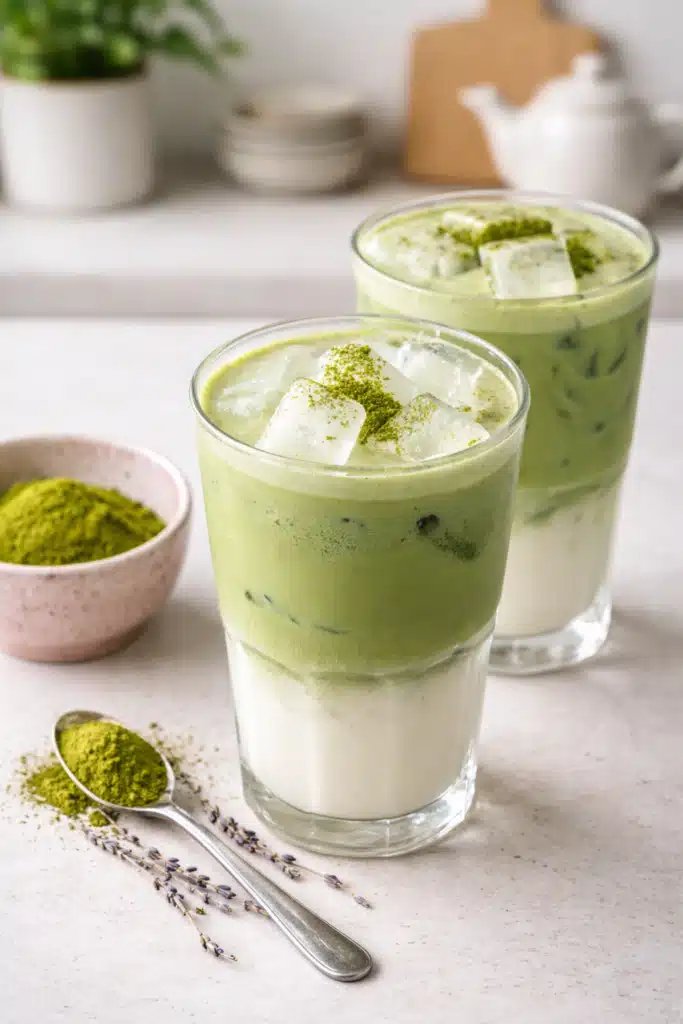
- Iced: I sweeten the milk first, add ice, and pour the whisked matcha on top for clean layers.
For café-style looks without the fuss, I stick to syrup for flavor and keep the color natural—my lavender matcha latte fits a normal routine and tastes clean every time.
Print
Lavender Matcha Latte (Hot or Iced) – Simple 5-Minute Method
- Total Time: 5 minutes
- Yield: 1 serving 1x
- Diet: Vegetarian
Description
Lavender Matcha Latte is a smooth, creamy matcha latte lightly sweetened with lavender syrup. The drink blends fresh green matcha with milk and gentle floral notes, creating a balanced cup where matcha leads and lavender stays soft in the background.
Ingredients
- 1–1½ teaspoons matcha powder, sifted
- 60 ml warm water (not boiling)
- 180–240 ml milk (dairy, oat, almond, or soy)
- 1–2 teaspoons lavender syrup
- Ice (for iced version)
- Optional: drop of vanilla extract
Instructions
- Sift matcha powder into a cup or bowl using a fine mesh sieve.
- Add warm water and whisk until smooth and slightly frothy.
- Stir in lavender syrup and mix well.
- Heat milk gently until warm for a hot latte, or keep milk cold for iced.
- For hot latte: pour warm milk into the matcha mixture and stir.
- For iced latte: fill a glass with ice and pour milk over the ice.
- Slowly pour the whisked matcha over the milk for a layered effect.
- Stir before drinking if desired.
Notes
Use fresh, bright-green matcha for the best flavor. Avoid boiling water, which can make matcha bitter. Start with a small amount of lavender syrup and adjust gradually so the floral note stays soft and balanced.
- Prep Time: 5 minutes
- Cook Time: 0 minutes
- Category: Drink
- Method: No-Cook
- Cuisine: Japanese-Inspired
Nutrition
- Serving Size: 1 cup
- Calories: 120
- Sugar: 10g
- Sodium: 80mg
- Fat: 4g
- Saturated Fat: 2g
- Unsaturated Fat: 2g
- Trans Fat: 0g
- Carbohydrates: 16g
- Fiber: 1g
- Protein: 4g
- Cholesterol: 10mg
Ingredients that actually matter for a lavender matcha latte
From a home-cook perspective, the right matcha, milk, and lavender syrup decide whether your lavender matcha latte recipe tastes gentle and balanced or too grassy and “perfumey.” Here’s what I use and why, in plain language—so every cup turns out clean and sippable.
Matcha (grade, prep, and water — smooth base, no grit)
For this latte, I use a reliable latte/cooking-grade matcha from a fresh, bright-green tin or pouch. I sift 1–1½ teaspoons through a fine mesh sieve so it won’t clump, then whisk with warm, not boiling water—about hot-bath temperature—so the base blends smoothly and stays mellow. If the drink tastes dull or bitter, I check two things first: was the powder a bit old (faded color, flat aroma), or was the water too hot? A tiny pinch more matcha can add depth; too much will crowd the lavender, so I increase in ¼-teaspoon steps to keep the cup balanced.
Milk choices (body and foam — texture that suits your cup)
I pick milk for texture first because it sets the feel of the latte. Whole dairy gives the most body and a café-style sip. Oat milk is my non-dairy go-to for creaminess and easy micro-foam. Almond milk is lighter and a bit nutty; it won’t foam as thick but keeps an iced cup crisp. For hot mugs, I warm milk gently (no scorching) so the floral note stays soft and the matcha doesn’t turn sharp. For iced, I don’t chase big foam—the ice will tame it, and the drink still looks clean and layered.
Lavender syrup (strength and balance — floral, not “soapy”)
Lavender should whisper, not shout, especially in a lavender matcha latte. I start with 1 to 2 teaspoons of lavender syrup per serving and adjust. Store-bought is fine; homemade is easy: equal parts sugar and water, a small spoon of culinary dried lavender, quick steep, strain, chill. If the cup leans “soapy,” I reduce the syrup by ½ teaspoon and add a tiny drop of vanilla to round it out. For color, I skip dyes—the flavor matters more than a purple hue, and a natural look fits everyday cooking.
Sweetener tweaks (optional — gentle, not cloying)
If I want extra sweetness beyond the syrup, I add simple syrup a little at a time so I don’t mask the tea. Honey works but can crowd the floral note; maple shifts the profile—nice in winter, less classic for this latte. My goal is a cup where matcha leads, lavender supports, and sweetness quietly ties everything together.
How to make a lavender matcha latte (5-minute base method)
Lavender matcha latte — this is the consistent 5-minute method I use. One base, then quick branches for iced, hot, and an optional cold-foam finish.
Before you start (tools & ratios)
- Tools: small whisk or milk frother (a jar with a tight lid works), fine mesh sieve, mug or tall glass.
- Base ratio (1 serving):
- 1–1½ tsp matcha, sifted
- 60 ml warm water (about 70–80°C / not boiling)
- 180–240 ml milk (dairy or non-dairy)
- 1–2 tsp lavender syrup, to taste
- Ice for iced version
Base method (works for hot or iced)
- Sift & whisk: Sift matcha into a cup. Add warm water and whisk until completely smooth and lightly frothy.
- Sweeten: Stir in lavender syrup. Start small; you can always add more.
- Milk: Add your milk of choice. That’s the core lavender matcha latte.
Iced variation (layered, clean look)
- Stir lavender syrup into the milk.
- Fill a tall glass with ice.
- Pour the sweetened milk over ice, then slowly pour the whisked matcha on top.
- Sip as is for layers, or stir once for a balanced cup.
Hot variation (cozy mug)
- Warm the milk gently until steamy, not scalding.
- Combine the whisked matcha and lavender syrup in a mug.
- Pour in warm milk, holding back foam with a spoon, then spoon the foam over the top.
Optional lavender cold foam (no dyes)
- In a small pitcher or jar, whisk or shake 60 ml milk with ½–1 tsp lavender syrup until thick and silky.
- Spoon over an iced lavender matcha latte. If it tastes “perfumey,” reduce the syrup next time and add a drop of vanilla for roundness.
Quick fixes on the fly
- Gritty? Sift the matcha and whisk 10–15 seconds longer.
- Too floral? Cut the syrup by ½ tsp and add a splash more milk.
- Too weak? Add ¼ tsp matcha, whisk again, and keep the water warm—not boiling.
Taste & troubleshooting
When a lavender matcha latte misses the mark, it’s usually one of four things: too floral, gritty, weak, or sharp. Here’s exactly how I fix each one fast.
If it tastes “soapy” or too floral
I reduce lavender syrup by ½ teaspoon and add a tiny drop of vanilla to soften the edges. I also check my dried lavender if I made syrup at home—older buds can taste dusty; overly long steeps get perfumey. For the next cup, I start with 1 teaspoon of syrup, taste, then add in ¼–½ teaspoon steps so the lavender supports the matcha instead of covering it.
If it’s gritty or clumpy
This comes from unsifted matcha or water that’s too cool to dissolve the powder smoothly. I sift the matcha, then whisk 10–15 seconds longer with warm, not boiling water. If I’m using a jar, I shake for a full 20–30 seconds. A quick strain through a fine mesh sieve before adding milk also saves a gritty batch.
If the flavor is weak or watery
I increase matcha by ¼ teaspoon and shorten any wait time between whisking and pouring (matcha settles). For iced cups, I avoid overfilling with ice; I fill the glass two-thirds, not to the brim. If I’ve added extra syrup, I balance with a splash more matcha so sweetness doesn’t flatten the tea. The goal is a lavender matcha latte where tea leads and lavender sits comfortably behind it.
If it tastes sharp or bitter
I check water temperature first—boiling water can scorch matcha. I aim for hot-bath warm and whisk until the color looks bright and even. If the milk was scalded, I heat it more gently next time; scorched milk makes the whole cup taste harsher. A small pinch of extra milk or a ¼ teaspoon of syrup can round out edges without turning the drink sugary.
Foam, milk, and temperature notes
Oat milk foams easily and reads creamier; almond is lighter and can look thin if over-iced. For hot mugs, I keep milk steamy, not boiling, so the floral note stays soft. For iced, I sweeten the milk before layering—this prevents the first sips from tasting plain and the last sips from tasting overly sweet.
Color expectations (no stress)
Café versions sometimes use purple foam or lavender powder for color. I stick to syrup for flavor, which keeps the drink a natural green. The taste is what matters; the color can stay simple and still feel special at home.
Taste & troubleshooting
When a lavender matcha latte misses the mark, it’s usually one of four issues: too floral, gritty, weak, or sharp. Here’s exactly how I fix a lavender matcha latte fast, with small tweaks that keep the drink balanced.
If your lavender matcha latte tastes “soapy” or too floral
I reduce lavender syrup by ½ teaspoon and add a tiny drop of vanilla. That softens edges so the lavender matcha latte reads gentle, not perfume-like. If I made syrup at home, I also check steep time; over-steeping can push a lavender matcha latte into the soapy zone. Next cup, I start with 1 teaspoon of syrup, taste, then add in ¼–½ teaspoon steps.
If your lavender matcha latte is gritty or clumpy
Grit usually means unsifted powder or water that’s too cool. I sift the matcha, then whisk with warm, not boiling water for 10–15 seconds. If I’m shaking the lavender matcha latte in a jar, I go a full 20–30 seconds. A quick pass through a fine mesh sieve can rescue a lavender matcha latte that’s already mixed.
If your lavender matcha latte tastes weak or watery
I increase matcha by ¼ teaspoon and shorten the gap between whisking and pouring—matcha settles, and that thins a lavender matcha latte. For iced versions, I don’t overfill with ice; two-thirds of the glass keeps a lavender matcha latte cold without diluting it. If I’ve added extra syrup, I balance sweetness with a splash more matcha so the lavender matcha latte stays tea-forward.
If your lavender matcha latte tastes sharp or bitter
I check water temperature first. Boiling water scorches, and that makes a lavender matcha latte taste harsh. I aim for hot-bath warm and whisk until the color looks bright and even. If the milk was scalded, I heat it more gently; scorched milk can flatten a lavender matcha latte. A little more milk or ¼ teaspoon syrup can round edges without turning the lavender matcha latte sugary.
Foam, milk, and temperature notes
Oat milk foams easily and gives a creamier lavender matcha latte; almond is lighter and can look thin if there’s too much ice. For hot mugs, I keep milk steamy, not bubbling—overheating makes a lavender matcha latte taste sharper. For iced, I sweeten the milk first so the lavender matcha latte sips balanced from top to bottom.
Color expectations (no stress)
Cafés sometimes use purple foam or lavender powder for color. I stick to syrup for flavor, which keeps a lavender matcha latte a natural green. The taste matters most; a simple-looking lavender matcha latte can still feel special at home.
Copycat corner: matching the café vibe at home
I make a lavender matcha latte at home when I want that café feel without guessing on sweetness. Here’s what I can match closely, what I don’t chase, and how I dial flavor to the cup I actually enjoy.
What I can match
- Flavor balance: Gentle lavender behind fresh, tea-forward matcha. I keep syrup at 1–2 teaspoons and adjust in ¼–½ teaspoon steps so the lavender matcha latte stays balanced.
- Texture: With whole milk or a good oat milk, I get a creamy sip that feels café-style. A quick froth (hand whisk, frother, or French press) adds light micro-foam.
- Layered look (iced): I sweeten the milk first, add ice, then pour whisked matcha on top. The layers hold long enough for photos and still stir together cleanly.
What I don’t chase
- Purple foam or lavender powder: Those are mostly for visuals. I stick to syrup for flavor and let the drink stay naturally green.
- Ultra-sweet profiles: Café versions often skew sweeter. I prefer a lavender matcha latte where tea leads and lavender supports, so I start lower on syrup.
How I mimic the café experience
- Cold foam, simply: 60 ml milk + ½–1 tsp lavender syrup, shaken in a jar until silky, then spooned over an iced lavender matcha latte.
- Ice management: Two-thirds ice in the glass keeps the drink cold without turning watery.
- Consistent color: Sift matcha and use warm (not boiling) water; you’ll see an even, bright green that looks polished without dyes.
Price and control (why I make it at home)
One tin of matcha and a small bottle of lavender syrup covers many cups. I set the sweetness, choose the milk, and switch between hot and iced without changing the base method. The result is a lavender matcha latte that tastes familiar, costs less per serving, and fits right into a normal routine.
Sweetness & swaps
I like a lavender matcha latte that’s tea-forward with gentle floral notes. Here’s how I adjust sweetness, choose milks, and handle caffeine without turning the cup sugary or sharp.
Sweetness: small steps that add up
- Starting point: 1 teaspoon lavender syrup per serving. Taste, then add ¼–½ teaspoon until it lands where you like.
- If it tips sweet: I add a splash of milk or ¼ teaspoon more matcha to bring the tea forward again.
- Lower-sugar ideas: Make a light syrup (2:3 sugar to water), or use part syrup + part plain simple syrup so the lavender doesn’t dominate.
Dairy-free and lighter options
- Oat milk: Creamiest non-dairy choice and easy to micro-foam. Great for a cozy lavender matcha latte.
- Almond milk: Lighter body, clean finish. I use it more for iced cups.
- Coconut milk (carton): Adds mild coconut notes; I keep the lavender on the low side so flavors don’t clash.
- Soy milk: Neutral and foams well; watch heat to avoid a cooked taste.
Flavor add-ins that stay balanced
- Vanilla: A drop rounds the floral edge without extra sugar.
- Citrus zest (tiny pinch): Brightens the cup; a little goes a long way.
- Salt (tiny pinch): Softens bitterness if the water ran too hot.
Caffeine and comfort (plain talk)
Matcha naturally contains caffeine. I keep servings to 1–1½ teaspoons matcha per cup and avoid making a second lavender matcha latte too close to bedtime. If I’m sensitive, I pick a smaller mug and sip slowly.
Batch-friendly tweaks
- Make-ahead syrup: I keep a small jar of lavender syrup in the fridge and measure it by the teaspoon so sweetness stays consistent.
- Pre-measured matcha: I portion matcha into small containers (or sachets) for busy mornings; it keeps the routine quick and the flavor predictable.
Lavender syrup: quick homemade version + storage
I use lavender syrup for steady, gentle flavor in a lavender matcha latte. Dried, food-grade lavender keeps the taste clean and predictable.
Quick small-batch lavender syrup (about 1 cup)
- 1 cup water
- 1 cup sugar
- 1–1½ tsp culinary dried lavender (English lavender is typical)
Method:
Bring water and sugar to a brief simmer, stir to dissolve, turn off heat, add lavender, and steep 5–10 minutes. Strain through a fine sieve, cool, then bottle. Start with the shorter steep for a softer cup; longer steeps lean floral faster. Culinary dried lavender is preferred; ornamental varieties can taste harsh.
Storage and food-safety notes
- Refrigerate in a clean, airtight container. University of Maine Extension advises storing flavored simple syrups in the fridge and using within about a month; I make small batches and watch for cloudiness or off smells.
- Dried lavender is intended as a flavoring in normal food amounts; the FDA lists lavender as a flavoring agent (context only—this isn’t medical advice). Always choose products labeled culinary.
- If you want longer keeping, freeze in ice cube trays and thaw as needed rather than keeping a large bottle open for weeks.
How I dose it in the latte
I start at 1 tsp per cup, taste, then add ¼–½ tsp at a time. If a latte reads “soapy,” I pull back the syrup next time and add a drop of vanilla for roundness. The goal is a tea-forward cup with lavender in the background.
Make-ahead, storage, and batching
I like having a plan for busy mornings, so I prep a few parts ahead. This keeps a lavender matcha latte fast without losing flavor.
1) Matcha concentrate (up to 48 hours)
- Ratio (4 cups): 6 tsp matcha + 240 ml warm (not boiling) water.
- Method: Sift matcha, whisk with warm water until smooth, cool, then refrigerate in a jar.
- Use: For each lavender matcha latte, pour 60 ml concentrate into a glass or mug, add 1–2 tsp lavender syrup, then finish with 180–240 ml milk.
- Notes: Separation is normal—shake or whisk before pouring. I aim to use the concentrate within 24–48 hours; the color and aroma stay brighter.
2) Pre-measure for speed
- Matcha packets: I portion 1–1½ tsp matcha into tiny containers or sachets. Grab, sift, whisk—no scooping on bleary mornings.
- Syrup measure: I keep a teaspoon inside the syrup jar so every lavender matcha latte lands at a consistent sweetness.
3) Iced latte meal-prep box
- In the fridge: A pitcher of milk, a small jar of lavender syrup, and the matcha concentrate.
- Assembly: Sweeten milk → add ice to the glass → pour milk → layer in whisked or shaken concentrate. This keeps an iced lavender matcha latte crisp and quick.
4) Hot latte shortcut
- Warm gently: I microwave milk in 20–30 second bursts until steamy, not bubbling, then combine with concentrate and syrup. Gentle heat keeps the floral note soft.
5) Cold foam timing
- Make fresh: Cold foam deflates over time. I whisk 60 ml milk with ½–1 tsp lavender syrup right before topping an iced lavender matcha latte. If I must prep, I shake it again for 5–10 seconds before serving.
6) Storage snapshot
- Lavender syrup: Refrigerate in a clean bottle; make small batches and watch for cloudiness or off smells.
- Matcha powder: Reseal tightly, keep away from light and heat; use within a few months for best flavor.
- Concentrate: Keep cold and capped; finish within 2 days for a brighter cup.
The goal is a routine you can repeat: concentrate + syrup + milk = a lavender matcha latte that tastes the same, every time, without slowing down your morning.
FAQs
Can I make a lavender matcha latte without a frother?
Yes. I whisk in a bowl or shake in a jar with a tight lid for 20–30 seconds. It won’t be café-thick, but the latte turns out smooth and balanced.
How much lavender syrup should I use?
I start with 1 teaspoon per cup, taste, then add ¼–½ teaspoon at a time. This keeps the lavender matcha latte gentle—not “soapy.”
Hot or iced—do I change the base?
No. I use the same base (whisked matcha + warm water + syrup), then add warm milk for hot or cold milk over ice for iced. Same method, different finish.
What water temperature works best for matcha?
Hot-bath warm, not boiling. If the water boils, the lavender matcha latte can taste sharp.
Which milk foams best?
Whole dairy and oat milk foam most consistently for me. Almond milk is lighter; great in iced lattes when I don’t need big foam.
Why does my drink look dull or clumpy?
That’s usually old matcha or unsifted powder. I sift first and whisk longer. If needed, I strain the latte once through a fine mesh sieve.
How do I keep iced lattes from tasting watery?
I fill the glass two-thirds with ice, not to the brim, and I pour the whisked matcha right before serving so it doesn’t settle.
Can I get the café’s purple color at home?
Cafés sometimes use colored foam or lavender powder. I stick to syrup for flavor—my lavender matcha latte stays naturally green, which is perfectly fine.
Is there a dairy-free version you like?
Yes. I use oat milk for creaminess or almond milk for a lighter iced latte. Same ratios; adjust syrup to taste.
How long does homemade lavender syrup last?
I refrigerate it in a clean bottle and make small batches. If it turns cloudy or smells off, I make a fresh batch. Freezing in ice-cube trays is an easy backup.