

What are the lemon balm weight loss benefits?
Lemon balm weight loss benefits are primarily indirect. Lemon balm (Melissa officinalis) does not directly burn fat or increase metabolic rate. Instead, its potential benefits relate to stress regulation, sleep quality, and digestive comfort — factors that influence eating behavior and long-term weight management.
Understanding this distinction is essential.
Interest in lemon balm weight loss benefits has increased as more people search for natural, non-stimulant approaches to weight management. Unlike thermogenic ingredients such as caffeine or green tea catechins, lemon balm is traditionally recognized for its calming and nervous-system-supportive properties.
A peer-reviewed clinical review published on PubMed Central discusses lemon balm’s neurological and calming effects, including its interaction with pathways involved in stress modulation.
Stress physiology matters in weight discussions because elevated stress levels may influence appetite patterns, food preference, and eating frequency. However, this does not mean lemon balm directly alters body fat stores.
Instead, the pathway is behavioral:
Calmer nervous system →Improved sleep rhythm →More stable appetite signaling →
More consistent food decisions →Gradual weight regulation over time
The lemon balm weight loss benefits discussed in this article focus on that indirect mechanism — not metabolic acceleration.
For a practical application, see our lemon balm recipe for weight loss.
For the complete scientific overview, visit the complete lemon balm weight loss guide.
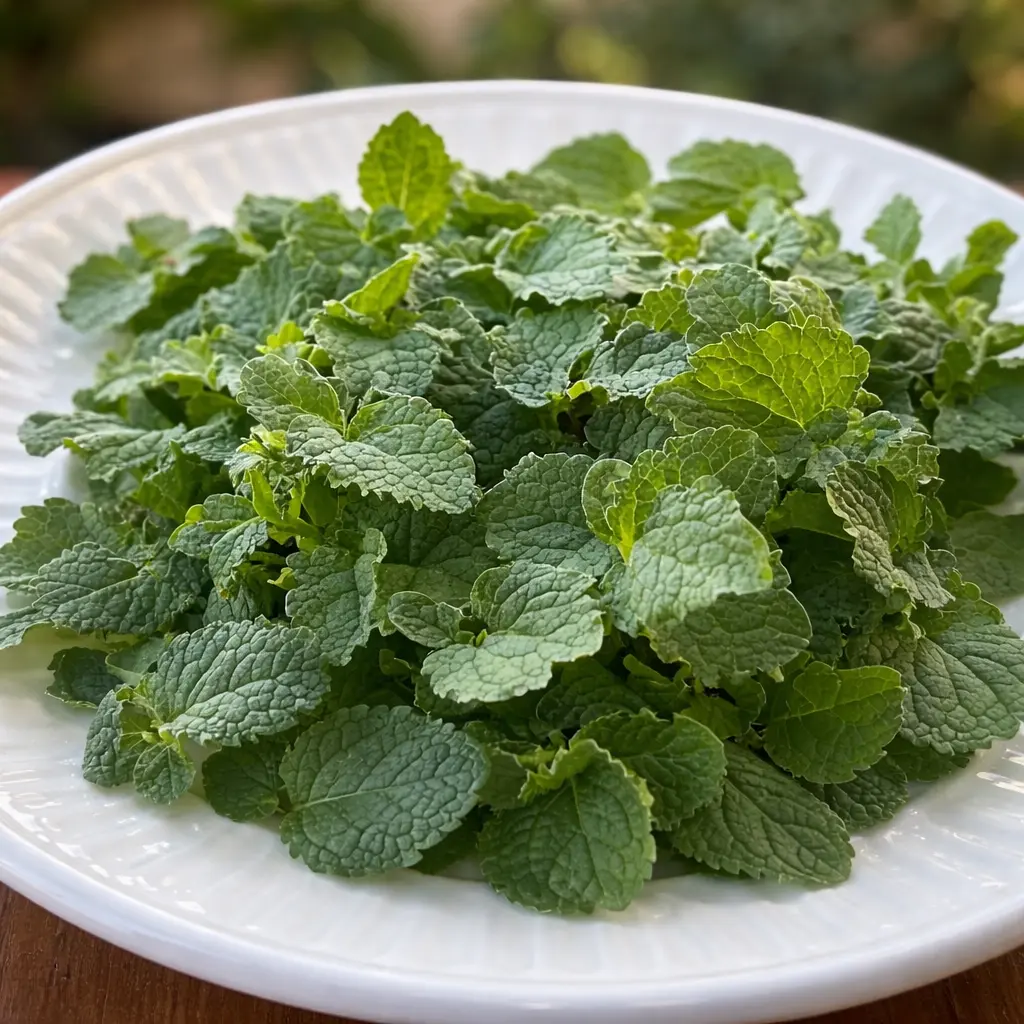
The Main Lemon Balm Weight Loss Benefits Explained
When discussing lemon balm weight loss benefits, it’s important to focus on realistic, evidence-aligned mechanisms rather than marketing claims. Lemon balm does not function as a stimulant or fat oxidizer. Its potential value lies in how it may support systems that influence eating behavior and routine stability.
Below are the primary indirect benefits often associated with lemon balm in weight-related discussions.
1️⃣ Stress Regulation & Cortisol Influence
One of the most cited lemon balm weight loss benefits relates to stress support.
Chronic stress can influence eating behavior through:
- Increased cravings for high-calorie foods
- Emotional eating patterns
- Irregular meal timing
The previously referenced peer-reviewed clinical review published on PubMed Central highlights lemon balm’s calming neurological effects, including modulation of pathways associated with stress response.
While this does not mean lemon balm lowers body fat directly, reduced stress reactivity may improve food decision stability over time.
This is a behavioral pathway — not a metabolic shortcut.
For a practical application of this mechanism, see our lemon balm recipe for weight loss.
2️⃣ Sleep Quality & Appetite Hormones
Sleep disruption is consistently associated with appetite dysregulation.
Research in sleep science shows that insufficient sleep may:
- Increase ghrelin (hunger hormone)
- Decrease leptin (satiety hormone)
- Increase preference for calorie-dense foods
The Cleveland Clinic explains the connection between sleep deprivation and appetite signaling in its public health resources.
If lemon balm supports relaxation before bedtime, it may indirectly contribute to improved sleep consistency — which in turn may support appetite regulation.
Again, the lemon balm weight loss benefits here are supportive and indirect.
3️⃣ Digestive Comfort & Bloating Perception
Lemon balm has traditionally been used for mild digestive discomfort.
The National Library of Medicine herbal monograph on lemon balm notes its historical use in supporting gastrointestinal comfort:
Digestive comfort does not equal fat loss. However, reduced bloating and discomfort may:
- Improve perceived abdominal comfort
- Reduce reactive eating
- Support meal timing consistency
This distinction is important. Bloating reduction is not the same as fat reduction.
4️⃣ Routine & Behavioral Stability
One overlooked lemon balm weight loss benefit is routine reinforcement.
Establishing a consistent evening ritual may:
- Reduce late-night snacking
- Replace higher-calorie beverages
- Improve daily structure
Behavioral consistency often influences long-term calorie balance more than isolated interventions.
For full context, review the complete lemon balm weight loss guide.
Key Takeaway
The strongest lemon balm weight loss benefits are indirect:
✔ Stress support
✔ Sleep rhythm stabilization
✔ Digestive comfort
✔ Habit reinforcement
They support behavior — not metabolism.

Does Lemon Balm Burn Fat? (Myth vs Science)
One of the most common misconceptions surrounding lemon balm weight loss benefits is the belief that lemon balm directly burns fat or increases metabolic rate.
There is currently no high-quality clinical evidence showing that lemon balm:
✘ Increases thermogenesis
✘ Raises resting metabolic rate
✘ Enhances fat oxidation
✘ Targets abdominal fat
Lemon balm is not a stimulant. It does not contain caffeine or catechins associated with mild metabolic increases found in ingredients like green tea.
Where the Confusion Comes From
The misunderstanding often develops from this simplified narrative:
Relaxation improves habits →Habits improve food choices →Food choices affect calorie balance →
Weight changes occur
The effect is behavioral, not biochemical.
Lemon balm weight loss benefits may support stress regulation, and stress can influence eating behavior. However, reducing stress is not equivalent to increasing fat burning.
What Science Actually Supports
Sustainable fat loss depends on:
- Long-term energy balance
- Calorie intake relative to expenditure
- Physical activity
- Sleep consistency
- Hormonal regulation
The Harvard T.H. Chan School of Public Health explains that weight change fundamentally depends on energy balance over time:
No herbal tea overrides that equation.
Lemon Balm vs Thermogenic Ingredients
For clarity:
| Lemon Balm | Thermogenic Ingredients |
|---|---|
| Calming | Stimulant-based |
| Supports stress balance | May slightly increase energy expenditure |
| Indirect behavioral effect | Mild metabolic influence |
| No direct fat-burning mechanism | Small thermogenic impact |
The lemon balm weight loss benefits discussed in this article relate to routine stability and appetite rhythm — not metabolic acceleration.
Why This Clarification Matters
Overstating herbal effects can:
- Create unrealistic expectations
- Reduce long-term adherence
- Undermine credibility
A balanced understanding increases sustainability.
If you’re looking for practical preparation guidance, see the lemon balm recipe for weight loss.
For a comprehensive scientific overview, review the complete lemon balm weight loss guide.
Bottom Line
Lemon balm does not burn fat.
It may support behaviors that influence calorie balance over time.
That distinction protects both results and credibility.
Who May Benefit Most From Lemon Balm?
Lemon balm weight loss benefits are most relevant for individuals whose eating patterns are influenced by stress, sleep disruption, or nervous-system overload.
This herb is not a metabolic accelerator. It is a calming botanical.
That distinction helps identify who may benefit most.
1️⃣ Stress-Driven Eaters
Individuals who experience:
- Emotional eating
- Late-night snacking
- Cravings during stressful periods
- Increased appetite during high-pressure weeks
May find lemon balm weight loss benefits most noticeable.
Stress can influence food preference and meal timing. If calming the nervous system improves evening stability, that may indirectly improve calorie consistency.
This does not suppress appetite chemically — it may reduce reactive behavior.
2️⃣ Poor Sleepers
Sleep disruption is consistently linked to altered appetite signaling.
Those who:
- Struggle to fall asleep
- Wake frequently at night
- Experience late-night cravings
- Feel fatigued and snack frequently
May benefit from an evening lemon balm routine.
Improved sleep consistency can support better appetite regulation the following day.
For a deeper explanation of this connection, see the complete lemon balm weight loss guide.
3️⃣ Caffeine-Sensitive Individuals
Many weight-related beverages rely on caffeine.
However, caffeine can:
- Increase anxiety in some individuals
- Disrupt sleep
- Trigger jitteriness
- Increase cortisol temporarily
Lemon balm offers a non-stimulant alternative.
For those seeking a calming evening option, a lemon balm recipe for weight loss may fit better than stimulant-based drinks.
4️⃣ Individuals Focused on Routine Consistency
Sometimes the greatest benefit is structural.
A structured evening tea ritual can:
- Replace dessert habits
- Reduce sugary beverage intake
- Create a mental “kitchen closed” cue
- Reinforce daily rhythm
Habit formation plays a significant role in long-term weight regulation.
The lemon balm weight loss benefits most often emerge from behavioral consistency — not biochemical acceleration.
Who May Not See Noticeable Effects
Lemon balm may offer limited noticeable benefit for individuals whose:
- Calorie intake significantly exceeds energy expenditure
- Physical activity is minimal
- Sleep is already consistent
- Stress levels are low
In these cases, metabolic fundamentals matter more than herbal support.
As emphasized by the Harvard T.H. Chan School of Public Health, long-term weight outcomes depend primarily on sustained energy balance:
Key Perspective
Lemon balm weight loss benefits are most relevant when stress, sleep, or routine instability are part of the weight-management equation.
It supports regulation — not fat oxidation.

Lemon Balm vs Green Tea for Weight Loss
Lemon balm and green tea are often compared in weight-related discussions, but they function very differently.
Understanding the difference helps set realistic expectations.
Primary Mechanism
Lemon Balm
- Calming herb
- Nervous-system supportive
- May support stress balance
- Indirect behavioral effect
Green Tea
- Contains caffeine
- Contains catechins (EGCG)
- Mild thermogenic properties
- Slight increase in energy expenditure
Green tea has been studied for small metabolic effects due to catechins and caffeine. Lemon balm, by contrast, does not contain stimulants and does not increase calorie burn.
How They Influence Weight Differently
| Lemon Balm | Green Tea |
|---|---|
| Calming | Mild stimulant |
| Supports relaxation | Increases alertness |
| Indirect appetite stability | May slightly increase thermogenesis |
| Better for evening use | Better for daytime use |
| No direct fat-burning mechanism | Mild metabolic effect documented |
The lemon balm weight loss benefits are primarily behavioral and regulatory.
Green tea’s effects are more metabolic, though typically modest.
Which One Is Better?
The answer depends on the individual.
Lemon balm may be preferable for:
- Stress-driven eaters
- Poor sleepers
- Caffeine-sensitive individuals
- Evening routine support
Green tea may be preferable for:
- Daytime energy support
- Mild thermogenic assistance
- Individuals who tolerate caffeine well
Neither replaces calorie balance fundamentals.
As outlined by the Harvard T.H. Chan School of Public Health, sustainable fat loss depends primarily on long-term energy balance — not a single ingredient:
Can You Use Both?
Some individuals:
- Use green tea in the morning
- Use lemon balm in the evening
This separates stimulation from relaxation and supports circadian rhythm consistency.
If you’re looking for preparation guidance, see the lemon balm recipe for weight loss.
For the broader scientific perspective, review the complete lemon balm weight loss guide.
Key Takeaway
Green tea may offer mild metabolic support.
Lemon balm supports behavioral stability.
The lemon balm weight loss benefits lie in nervous-system balance — not thermogenesis.
FAQ – Lemon Balm Weight Loss Benefits
Does lemon balm help with weight loss?
Lemon balm weight loss benefits are primarily indirect. Lemon balm does not burn fat or increase metabolism. Instead, it may support stress regulation, sleep quality, and digestive comfort. These factors influence eating behavior and routine consistency, which can contribute to long-term weight management when combined with balanced nutrition.
Can lemon balm reduce belly fat?
There is no clinical evidence that lemon balm reduces belly fat specifically. Lemon balm weight loss benefits do not include spot reduction. Fat loss occurs systemically when sustained calorie balance shifts over time. Lemon balm may support behaviors that influence appetite stability, but it does not target abdominal fat directly.
How long does lemon balm take to work for weight support?
Some individuals notice calming effects within 30–60 minutes. However, lemon balm weight loss benefits related to routine and appetite stability may take days or weeks of consistent use. Results depend more on behavioral changes than on biochemical fat-burning mechanisms.
Does lemon balm suppress appetite?
Lemon balm does not chemically suppress appetite. The lemon balm weight loss benefits most often discussed relate to stress reduction and improved sleep rhythm. When stress and fatigue decrease, appetite patterns may feel more stable, but this is a behavioral effect — not a pharmacological one.
Is lemon balm good for metabolism?
There is no strong evidence that lemon balm increases metabolic rate. Unlike stimulant-based ingredients, lemon balm weight loss benefits do not include thermogenic activity. Its primary function is calming nervous-system support, not metabolic acceleration.
Can you drink lemon balm every day?
For most healthy adults, moderate tea consumption (1–2 cups daily) is generally considered mild. However, individuals with thyroid conditions or those taking sedative medications should consult a healthcare professional before regular use. Lemon balm weight loss benefits do not require high dosing.
Final Thoughts: Are Lemon Balm Weight Loss Benefits Worth It?
Lemon balm weight loss benefits are subtle, indirect, and habit-based.
Lemon balm does not burn fat.
It does not increase metabolic rate.
It does not replace calorie balance fundamentals.
What it may do is support:
✔ Stress regulation
✔ Sleep consistency
✔ Digestive comfort
✔ Behavioral stability
For individuals whose eating patterns are influenced by stress, fatigue, or nervous-system overload, these supportive effects can matter.
The pathway looks like this:
Calmer evenings →Better sleep rhythm →More stable appetite signaling →More consistent food decisions →Long-term weight regulation
That is where lemon balm weight loss benefits truly fit.
When It Makes Sense to Try It
A lemon balm routine may be worth exploring if:
- You struggle with stress-related snacking
- Evening cravings disrupt consistency
- Sleep quality affects next-day appetite
- You prefer non-stimulant herbal options
It is not designed to replace structured nutrition, resistance training, or energy balance awareness.
It is a supportive tool — not a standalone solution.
How to Use It Strategically
If you decide to try it:
- Start with a simple lemon balm recipe for weight loss
- Use it consistently for at least 1–2 weeks
- Pair it with structured eating habits
- Avoid expecting rapid visual changes
For the complete scientific overview, visit the complete lemon balm weight loss guide
The Bottom Line
The strongest lemon balm weight loss benefits are behavioral.
They support routine.
They support regulation.
They support consistency.
And consistency is what ultimately drives sustainable results.
This content is for informational purposes only and does not replace medical advice. Consult your physician or a qualified healthcare professional before making any changes to your diet, supplement routine, or weight-management plan.