
Lemon Balm Weight Loss Guide: Introduction
Lemon balm weight loss guide: Lemon balm (Melissa officinalis) is a calming herbal plant traditionally used for stress, digestion, and sleep support. While it does not directly burn fat, lemon balm may indirectly support weight management through stress regulation, appetite awareness, and routine reinforcement.
Interest in lemon balm for weight management has increased as more people look for non-stimulant, herbal approaches to support healthy habits. Unlike caffeine-based beverages such as green tea or coffee, lemon balm is primarily known for its calming and digestive properties.
That distinction is critical.
This lemon balm weight loss guide focuses on evidence-based clarity rather than exaggerated claims. Lemon balm is not a thermogenic compound. It does not increase metabolic rate. It does not target belly fat. Instead, its potential role in weight management is indirect and behavioral.
Many individuals exploring herbal support are typically seeking help with:
- Stress-related eating
- Evening cravings
- Digestive discomfort
- Poor sleep affecting appetite regulation
Lemon balm has been traditionally used for nervous system support and mild gastrointestinal relief. The PubMed Central explains that lemon balm has been studied primarily for calming effects and digestive support.
Understanding this context is essential before evaluating lemon balm in any weight-related framework.
This lemon balm weight loss guide will break down:
- What lemon balm is and how it works
- The biological pathways potentially connected to weight patterns
- What current research supports — and what it does not
- How to use lemon balm safely
- How it compares to other natural weight loss drinks
If you’re looking for a direct fat-burning herb, lemon balm is not that.
If you’re looking for structured, calming support that may help regulate stress-driven behaviors, this guide will explain where it may fit — and where it does not.
Before continuing, one foundational principle must remain clear: Sustained weight loss is driven by long-term energy balance.
Herbal support tools may assist routine and consistency — but they do not override physiology.
How Lemon Balm May Support Weight Management (Mechanisms Explained)
Lemon balm does not increase metabolic rate or directly burn fat. The potential relevance of lemon balm in a weight-support context comes from indirect physiological and behavioral pathways.
This lemon balm weight loss guide focuses on those pathways clearly and realistically.
There are four primary mechanisms through which lemon balm may support weight-related routines:
- Stress regulation
- Sleep quality support
- Digestive comfort
- Behavioral reinforcement
None of these override calorie balance — but they may influence consistency.
2.1 Stress Regulation & Emotional Eating
Chronic stress can influence eating behavior in measurable ways.
Elevated stress levels are associated with:
- Increased cravings
- Preference for energy-dense foods
- Disrupted appetite signaling
- Elevated cortisol patterns
Some research suggests lemon balm may interact with GABA-related pathways that promote calming effects. A review indexed on PubMed discusses lemon balm’s anxiolytic properties.
Lower stress does not equal direct fat loss. However, reduced stress may help decrease stress-driven eating episodes.
For individuals whose weight fluctuations are connected to emotional eating patterns, calming herbs may support routine stability.
This is one of the primary behavioral pathways discussed in this lemon balm weight loss guide.
2.2 Sleep Quality & Appetite Hormone Regulation
Sleep disruption is strongly associated with altered hunger regulation.
Poor sleep may affect:
- Ghrelin (hunger hormone)
- Leptin (satiety hormone)
- Evening cravings
- Late-night snacking
The National Institutes of Health explains how insufficient sleep can influence appetite and metabolic regulation.
Lemon balm is commonly consumed as an evening herbal tea due to its calming properties. While it is not a sedative medication, it may support relaxation before sleep.
Improved sleep consistency can indirectly support appetite awareness and structured eating.
Again — this is indirect influence, not metabolic stimulation.
2.3 Digestive Comfort & Bloating Perception
Digestive discomfort can influence eating timing and perception of weight changes.
Lemon balm has traditionally been used for mild digestive complaints such as:
- Gas
- Bloating
- Stomach tension
The PubMed Central notes its traditional digestive applications.
Digestive comfort does not equal fat reduction. However, reduced gastrointestinal discomfort may:
- Improve meal timing consistency
- Reduce reactive eating
- Decrease misinterpretation of bloating as fat gain
This is a subtle but relevant behavioral factor in a comprehensive lemon balm weight loss guide.
2.4 Behavioral Reinforcement & Routine Structure
One of the most overlooked mechanisms is ritual structure.
When individuals add lemon balm tea to a routine:
- It may replace late-night snacking
- It may reduce alcohol intake
- It may substitute higher-calorie beverages
- It reinforces a calming evening boundary
In this case, the weight-related benefit comes from behavior replacement — not biochemical fat burning.
This principle applies broadly across herbal routines and is also discussed in the Natural Weight Loss Drinks Guide.
Mechanism Summary Table
| Pathway | Direct Fat Burning? | Indirect Support? |
|---|---|---|
| Stress reduction | No | Yes |
| Sleep support | No | Yes |
| Digestive comfort | No | Yes |
| Routine reinforcement | No | Yes |
Core Takeaway of This Section
The lemon balm weight loss guide reveals a consistent pattern:
Lemon balm may support weight management indirectly through stress regulation, sleep consistency, digestive comfort, and behavioral structure.
It does not increase calorie expenditure.
It does not override energy balance.
It does not selectively reduce belly fat.
Understanding this distinction protects expectations — and improves long-term adherence.
What Lemon Balm Does NOT Do (Myth vs Reality)
To build credibility, this lemon balm weight loss guide must clearly define the limits of lemon balm.
There are currently no high-quality clinical trials demonstrating that lemon balm directly causes fat loss.
Understanding what lemon balm does not do is just as important as understanding what it may support indirectly.
Lemon Balm Does Not Burn Fat
Lemon balm is not a thermogenic herb.
It does not:
- Increase resting metabolic rate
- Stimulate fat oxidation
- Trigger lipolysis
- Activate calorie-burning pathways
Unlike caffeine-containing beverages such as green tea or black coffee, lemon balm does not act as a stimulant.
If a product claims lemon balm “melts fat,” that claim is not supported by current clinical evidence.
Lemon Balm Does Not Target Belly Fat
Spot reduction is not physiologically supported by science.
Fat loss occurs systemically when sustained calorie intake is lower than energy expenditure.
No herb — including lemon balm — selectively reduces abdominal fat.
If your goal is belly fat reduction, the primary drivers remain:
- Total energy balance
- Resistance training
- Sleep quality
- Protein intake
Herbal support cannot override those fundamentals.
Lemon Balm Does Not Suppress Appetite Chemically
There is no strong evidence that lemon balm directly suppresses appetite hormones.
It does not chemically block hunger signals.
Any appetite-related benefit described in this lemon balm weight loss guide is indirect and behavioral — typically through:
- Stress reduction
- Evening routine reinforcement
- Calming rituals replacing snacks
That distinction is essential.
Lemon Balm Does Not Detox Stored Fat
“Detox” language is common in wellness marketing.
However:
The body already has detoxification systems — primarily the liver and kidneys.
No herbal tea independently flushes fat from the body.
Lemon balm supports relaxation and digestive comfort.
It does not detox adipose tissue.
Lemon Balm Does Not Replace Nutrition Strategy
Even if lemon balm improves sleep or reduces stress-driven eating, it cannot:
- Compensate for chronic overeating
- Replace protein adequacy
- Offset poor dietary quality
- Substitute structured movement
Sustainable weight change requires consistent energy management over time.
This lemon balm weight loss guide positions lemon balm as a complementary tool — not a primary intervention.
Why This Clarity Matters
Health-related content falls into a category often considered “Your Money or Your Life” (YMYL).
Exaggerated claims reduce credibility and ranking stability.
By clearly outlining what lemon balm does not do, we:
✔ Improve trust signals
✔ Reduce misinformation risk
✔ Strengthen authority positioning
✔ Increase long-term SEO durability
In short:
Lemon balm may support calm and consistency.
It does not perform metabolic miracles.
Summary
Lemon balm:
✔ May support stress regulation
✔ May support relaxation
✔ May support structured routines
It does NOT:
✘ Burn fat
✘ Increase metabolism
✘ Target belly fat
✘ Detox the body
✘ Replace calorie balance
That balanced framing strengthens the entire lemon balm weight loss guide.
Evidence Review: What the Research Actually Shows
In any serious lemon balm weight loss guide, evaluating scientific evidence is essential before drawing conclusions.
When assessing lemon balm in a weight-management context, we must distinguish between:
- Direct fat-loss research
- Indirect physiological or behavioral research
- Traditional herbal applications
Currently, there are no large-scale human clinical trials demonstrating that lemon balm directly causes weight loss.
However, research does exist in related areas that may help explain why this lemon balm weight loss guide focuses on indirect support mechanisms.
4.1 Research on Anxiety & Stress Regulation
A major pillar of this lemon balm weight loss guide is stress regulation.
Lemon balm has been studied primarily for its calming and anxiolytic properties.
A review indexed on PubMed examined lemon balm’s effects on mood and cognitive performance, noting potential calming effects linked to GABA modulation.
These findings are relevant because chronic stress is associated with:
- Increased cortisol patterns
- Emotional eating behaviors
- Increased preference for high-calorie foods
While this does not demonstrate direct fat loss, it supports the behavioral pathway outlined earlier in this lemon balm weight loss guide.
Evidence strength: Moderate for anxiety support
Direct fat-loss evidence: None
4.2 Research on Sleep Support
Another pathway discussed in this lemon balm weight loss guide is sleep quality.
Sleep disruption is strongly linked to altered hunger signaling.
The National Heart, Lung, and Blood Institute (NHLBI) explains how insufficient sleep may influence appetite regulation and metabolic balance.
Lemon balm is commonly used in evening herbal formulations aimed at relaxation.
Some small studies have explored lemon balm in combination formulas for sleep quality.
However:
- Evidence is limited
- Studies are often small
- Many involve combination supplements
Improved sleep may indirectly support appetite awareness — but this lemon balm weight loss guide must emphasize that sleep support does not equal fat reduction.
Evidence strength: Limited to moderate for relaxation
Direct fat-loss evidence: None
4.3 Research on Digestive Comfort
Digestive support is another traditional application relevant to this lemon balm weight loss guide.
The PubMed Central (PMC) describes lemon balm’s traditional use for digestive symptoms and nervous tension.
Digestive comfort may influence:
- Meal timing
- Bloating perception
- Eating consistency
However, digestive relief does not translate to measurable fat loss.
This distinction reinforces the central principle of this lemon balm weight loss guide: indirect support does not equal metabolic activation.
Evidence strength: Traditional use supported; clinical data limited
Direct fat-loss evidence: None
4.4 Weight-Specific Studies: Current Limitations
A critical responsibility of any credible lemon balm weight loss guide is transparency.
At present:
There are no high-quality randomized controlled trials demonstrating that lemon balm independently reduces body fat in humans.
Any claims that lemon balm:
- Burns calories
- Speeds metabolism
- Targets belly fat
are not supported by established clinical research.
This lemon balm weight loss guide therefore positions lemon balm as a supportive routine tool — not a primary fat-loss intervention.
Evidence Summary Table
| Research Area | Evidence Strength | Direct Fat Loss Evidence? |
|---|---|---|
| Anxiety / Stress | Moderate | No |
| Sleep Support | Limited–Moderate | No |
| Digestive Comfort | Limited | No |
| Direct Weight Loss | None | No |
Clinical Perspective Within This Lemon Balm Weight Loss Guide
From an evidence-based standpoint:
Lemon balm may support behaviors that influence weight management.
It does not independently reduce adipose tissue.
The strength of this lemon balm weight loss guide lies in distinguishing supportive physiology from unsupported fat-burning claims.
Key Research Takeaway
The strongest scientific support for lemon balm lies in:
✔ Calming effects
✔ Stress regulation potential
✔ Relaxation support
There is currently no clinical evidence supporting direct fat-burning effects.
That balanced framing strengthens the authority and durability of this lemon balm weight loss guide.
How to Use Lemon Balm for Weight-Support Routines
A structured lemon balm weight loss guide must go beyond theory and explain how to apply lemon balm in a realistic, safe way.
Lemon balm is not used as a stimulant or fat burner. Instead, it is typically incorporated into routines that support stress regulation, digestion comfort, or sleep consistency.
Below are the most common and evidence-aligned ways to use lemon balm.
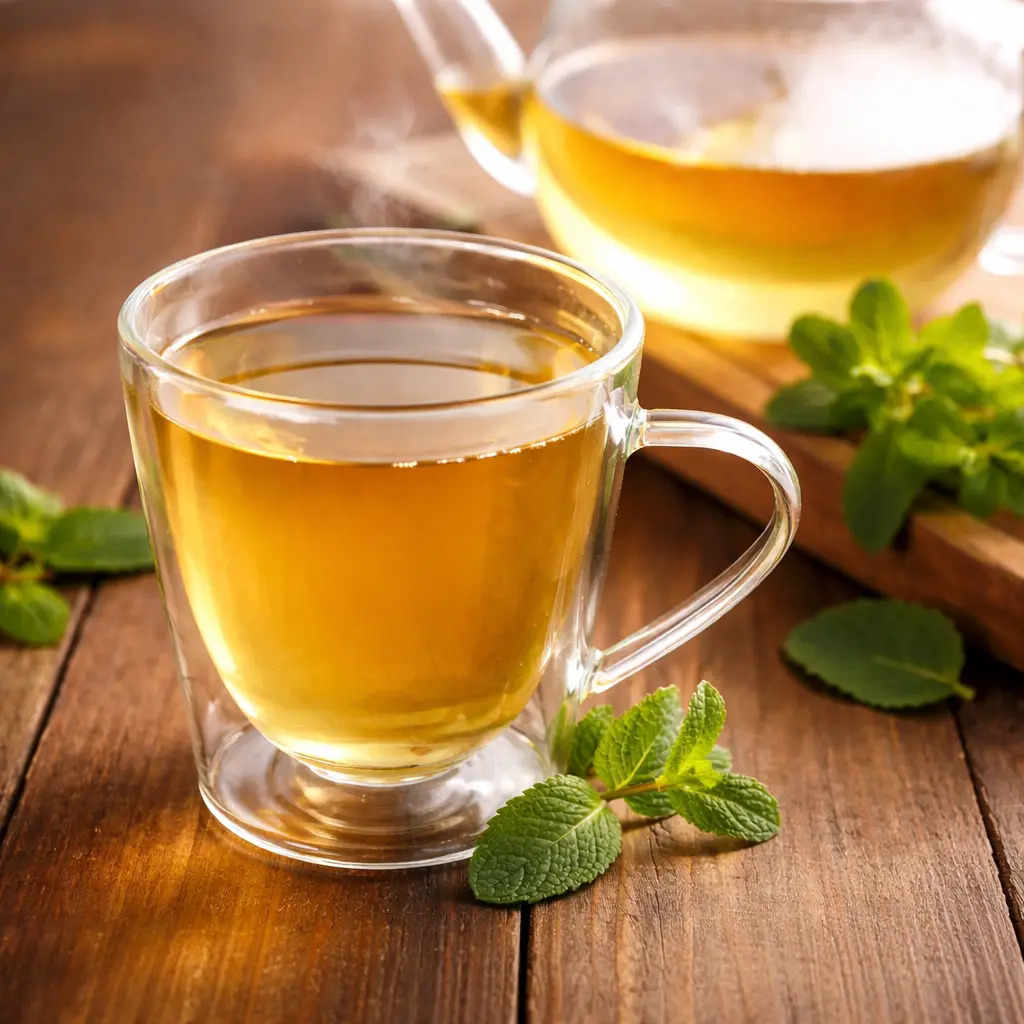
5.1 Lemon Balm Tea (Most Common Method)
Herbal tea is the simplest and most traditional preparation method discussed in this lemon balm weight loss guide.
Basic Preparation:
- 1–2 teaspoons dried lemon balm leaves
- 8–10 oz hot water
- Steep 5–10 minutes
- Strain and consume warm
Most individuals use lemon balm tea:
- In the evening
- After dinner
- During high-stress periods
- As a replacement for late-night snacking
For a full preparation breakdown, see:
→ lemon balm recipe for weight loss
In this lemon balm weight loss guide, tea remains the preferred format because it reinforces behavioral structure rather than encouraging supplement dependency.
5.2 Capsules & Standardized Extracts
Some individuals prefer capsules for convenience.
Common extract dosages range between 300–600 mg per serving, depending on standardization.
Important considerations:
- Follow manufacturer labeling
- Avoid stacking with sedative medications
- Monitor for drowsiness
Capsules may offer consistency, but they remove the ritual component that makes lemon balm useful in behavior-based routines.
This lemon balm weight loss guide prioritizes structured habit reinforcement over isolated supplementation.
5.3 Best Time to Take Lemon Balm
Timing matters more than dosage for most users.
Based on its calming profile, lemon balm is best used:
✔ In the evening to support relaxation
✔ Before stressful meals
✔ During periods of increased anxiety
✔ As a replacement for calorie-dense beverages
It is not ideal:
✘ Before workouts
✘ As a morning stimulant
✘ For acute metabolic stimulation
This timing distinction reinforces the core principle of this lemon balm weight loss guide: lemon balm supports regulation — not stimulation.
5.4 Combining Lemon Balm with Other Weight-Support Strategies
Lemon balm works best when layered into foundational habits.
For example:
- Pair evening tea with earlier protein intake
- Combine stress-reduction routines with structured meal timing
- Replace late-night desserts with calming herbal tea
If comparing lemon balm to stimulant-based beverages, see:
→ Natural Weight Loss Drinks Guide
If exploring how stress and appetite interact, review:
→ Lemon Balm Weight Loss Benefits
This interlinking strengthens the topical cluster while reinforcing realistic expectations.
5.5 How Long Before Seeing Results?
This is a common question in any lemon balm weight loss guide.
Because lemon balm does not directly reduce fat, “results” depend on behavioral changes.
Potential observable shifts may include:
- Reduced evening snacking
- Improved sleep consistency
- Lower stress-driven cravings
- More stable meal timing
Fat loss, if it occurs, will reflect overall calorie balance — not the herb alone.
Practical Implementation Summary
Within a structured lemon balm weight loss guide, practical use should emphasize:
✔ Measured intake
✔ Evening relaxation
✔ Habit reinforcement
✔ Safe dosage ranges
✔ Realistic expectations
Lemon balm is most effective as a routine stabilizer — not as a metabolic shortcut.
How to Use Lemon Balm for Weight-Support Routines
A structured lemon balm weight loss guide must go beyond theory and explain how to apply lemon balm in a realistic, safe way.
Lemon balm is not used as a stimulant or fat burner. Instead, it is typically incorporated into routines that support stress regulation, digestion comfort, or sleep consistency.
Below are the most common and evidence-aligned ways to use lemon balm.
5.1 Lemon Balm Tea (Most Common Method)
Herbal tea is the simplest and most traditional preparation method discussed in this lemon balm weight loss guide.
Basic Preparation:
- 1–2 teaspoons dried lemon balm leaves
- 8–10 oz hot water
- Steep 5–10 minutes
- Strain and consume warm
Most individuals use lemon balm tea:
- In the evening
- After dinner
- During high-stress periods
- As a replacement for late-night snacking
For a full preparation breakdown, see:
→ Lemon Balm Recipe for Weight Loss
In this lemon balm weight loss guide, tea remains the preferred format because it reinforces behavioral structure rather than encouraging supplement dependency.
5.2 Capsules & Standardized Extracts
Some individuals prefer capsules for convenience.
Common extract dosages range between 300–600 mg per serving, depending on standardization.
Important considerations:
- Follow manufacturer labeling
- Avoid stacking with sedative medications
- Monitor for drowsiness
Capsules may offer consistency, but they remove the ritual component that makes lemon balm useful in behavior-based routines.
This lemon balm weight loss guide prioritizes structured habit reinforcement over isolated supplementation.
5.3 Best Time to Take Lemon Balm
Timing matters more than dosage for most users.
Based on its calming profile, lemon balm is best used:
✔ In the evening to support relaxation
✔ Before stressful meals
✔ During periods of increased anxiety
✔ As a replacement for calorie-dense beverages
It is not ideal:
✘ Before workouts
✘ As a morning stimulant
✘ For acute metabolic stimulation
This timing distinction reinforces the core principle of this lemon balm weight loss guide: lemon balm supports regulation — not stimulation.
5.4 Combining Lemon Balm with Other Weight-Support Strategies
Lemon balm works best when layered into foundational habits.
For example:
- Pair evening tea with earlier protein intake
- Combine stress-reduction routines with structured meal timing
- Replace late-night desserts with calming herbal tea
If comparing lemon balm to stimulant-based beverages, see:
→ Natural Weight Loss Drinks Guide
If exploring how stress and appetite interact, review:
→ Lemon Balm Weight Loss Benefits
This interlinking strengthens the topical cluster while reinforcing realistic expectations.
5.5 How Long Before Seeing Results?
This is a common question in any lemon balm weight loss guide.
Because lemon balm does not directly reduce fat, “results” depend on behavioral changes.
Potential observable shifts may include:
- Reduced evening snacking
- Improved sleep consistency
- Lower stress-driven cravings
- More stable meal timing
Fat loss, if it occurs, will reflect overall calorie balance — not the herb alone.
Practical Implementation Summary
Within a structured lemon balm weight loss guide, practical use should emphasize:
✔ Measured intake
✔ Evening relaxation
✔ Habit reinforcement
✔ Safe dosage ranges
✔ Realistic expectations
Lemon balm is most effective as a routine stabilizer — not as a metabolic shortcut.
Lemon Balm vs Other Natural Weight Loss Drinks
A complete lemon balm weight loss guide must place lemon balm in context.
Many people researching lemon balm are also comparing it to:
- Green tea
- Black coffee
- Apple cider vinegar
- Pink salt drinks
Understanding how lemon balm differs helps prevent unrealistic expectations.
6.1 Lemon Balm vs Green Tea
Green tea is one of the most studied beverages in weight management research.
It contains:
- Caffeine
- Catechins (especially EGCG)
- Mild thermogenic properties
Green tea may slightly increase energy expenditure due to caffeine stimulation.
Lemon balm does not contain caffeine.
In contrast, lemon balm:
- Supports relaxation
- Does not stimulate the nervous system
- Does not increase thermogenesis
In a structured lemon balm weight loss guide, the distinction is clear:
Green tea → Mild metabolic stimulation
Lemon balm → Behavioral and stress support
Green tea may be more appropriate for morning use.
Lemon balm fits better in evening routines.
For broader beverage comparisons, see the Natural Weight Loss Drinks Guide.
6.2 Lemon Balm vs Black Coffee
Black coffee works primarily through caffeine-induced stimulation.
The National Institutes of Health Office of Dietary Supplements explains caffeine’s thermogenic and stimulant properties.
Coffee may temporarily:
- Increase metabolic rate
- Suppress appetite
- Improve exercise output
However:
- Tolerance develops
- Excess use may disrupt sleep
- Sleep disruption may negatively affect appetite regulation
A lemon balm weight loss guide highlights the trade-off:
Coffee → Stimulation with potential sleep cost
Lemon balm → Calm regulation with no metabolic stimulation
If sleep is impaired, weight regulation becomes more difficult. In that case, lemon balm may serve as a stabilizing tool rather than a stimulant.
6.3 Lemon Balm vs Apple Cider Vinegar
Apple cider vinegar (ACV) is frequently marketed as an appetite-control drink.
Some small clinical studies have explored vinegar and post-meal glucose response.
However:
- Evidence remains limited
- Effects are modest
- It must be diluted carefully
ACV works through possible satiety and glycemic effects.
Lemon balm works through nervous system regulation and stress support.
Both are indirect.
Neither directly burns fat.
A responsible lemon balm weight loss guide clarifies that these beverages influence habits more than metabolism.
6.4 Lemon Balm vs Pink Salt Drinks
Pink salt drinks are often framed as hydration-based metabolic boosters.
In reality, pink Himalayan salt is primarily sodium chloride, as shown in USDA FoodData Central.
Pink salt beverages focus on:
- Fluid balance
- Electrolyte structure
- Routine reinforcement
Lemon balm differs because:
- It contains no sodium
- It does not alter electrolyte balance
- It targets calming pathways instead
If exploring mineral hydration strategies, see:
→ Pink Salt Weight Loss Guide
→ Pink Salt Trick Recipe
The lemon balm weight loss guide positions lemon balm as a calming adjunct — not a hydration or electrolyte strategy.
Side-by-Side Comparison Table
| Drink | Primary Mechanism | Caffeine | Direct Fat Burning? | Best Time |
|---|---|---|---|---|
| Green Tea | Catechins + mild thermogenesis | Yes | Mild / Indirect | Morning |
| Black Coffee | Caffeine stimulation | Yes | Temporary | Morning / Pre-workout |
| Apple Cider Vinegar | Appetite modulation | No | No | Pre-meal |
| Pink Salt Drink | Hydration structure | No | No | Morning |
| Lemon Balm | Stress & relaxation support | No | No | Evening |
Strategic Positioning Within This Lemon Balm Weight Loss Guide
The most important distinction is this:
Stimulant-based drinks influence energy expenditure.
Lemon balm influences regulation and consistency.
For individuals whose challenges are stress-related eating or evening cravings, lemon balm may be more aligned with behavioral goals than stimulant beverages.
For individuals seeking acute thermogenic stimulation, green tea or coffee may appear more aligned — though still limited in magnitude.
Core Takeaway
Within the broader landscape of natural weight-support beverages:
Lemon balm is a calming stabilizer — not a metabolic accelerator.
That positioning strengthens credibility and differentiates this lemon balm weight loss guide from hype-driven content.
Who Should Consider Lemon Balm for Weight Support?
A well-structured lemon balm weight loss guide should clarify not only how lemon balm works — but who it may actually benefit.
Because lemon balm does not act as a stimulant or fat-burning compound, it is not for everyone.
Its strength lies in regulation, not acceleration.
Below are the scenarios where lemon balm may fit best.
✔ 1. Individuals with Stress-Related Eating Patterns
If overeating tends to occur during:
- High-pressure workdays
- Emotional stress
- Evening anxiety
- Mental fatigue
Lemon balm may support calming pathways that indirectly reduce stress-driven snacking.
In this lemon balm weight loss guide, stress regulation is one of the most evidence-supported indirect mechanisms.
For deeper insight into this pathway, see:
→ Lemon Balm Weight Loss Benefits
✔ 2. Those Struggling with Evening Cravings
Late-night eating is often driven by:
- Fatigue
- Habit loops
- Emotional decompression
- Poor meal timing earlier in the day
Replacing evening snacks with lemon balm tea can create a behavioral boundary.
In this case, the benefit comes from routine reinforcement — not metabolic stimulation.
This is one of the most practical applications highlighted in this lemon balm weight loss guide.
✔ 3. Individuals with Poor Sleep Affecting Appetite
Sleep disruption is strongly linked to altered hunger signaling.
If sleep inconsistency leads to:
- Increased cravings
- Lower dietary restraint
- Irregular meal timing
A calming evening herbal routine may help stabilize patterns.
Lemon balm is best suited for evening use, not morning energy enhancement.
For broader context on hydration and appetite regulation, see:
→ Hydration and Weight Loss
✔ 4. Those Seeking Non-Stimulant Support
Some individuals:
- Are sensitive to caffeine
- Experience anxiety with stimulants
- Have disrupted sleep from coffee
- Prefer herbal options
Compared to green tea or black coffee, lemon balm provides calming support without thermogenic stimulation.
This makes it appropriate for individuals who cannot tolerate stimulant-based weight-support beverages.
For beverage comparisons, see:
→ Natural Weight Loss Drinks Guide
✔ 5. Individuals Focused on Habit Structure
Lemon balm works best for people who understand that:
Weight change is behavioral over time.
When used consistently as:
- A nightly tea ritual
- A stress-buffer before meals
- A replacement for calorie-dense drinks
Lemon balm becomes a structure tool.
In this lemon balm weight loss guide, structure is emphasized more than supplementation.
Who Lemon Balm May NOT Be Ideal For
Lemon balm may not be suitable for individuals who:
✘ Expect rapid fat loss
✘ Want stimulant-driven metabolic effects
✘ Prefer pre-workout thermogenesis
✘ Are unwilling to adjust overall diet structure
✘ Are stacking multiple sedative supplements
If the primary goal is metabolic stimulation, caffeine-based beverages may align more closely — though even those have modest effects.
Lemon balm supports calm regulation, not acceleration.
Summary
The lemon balm weight loss guide best serves individuals who:
✔ Struggle with stress-related eating
✔ Experience evening cravings
✔ Have inconsistent sleep patterns
✔ Prefer non-stimulant herbal support
✔ Value routine consistency over quick results
This positioning increases clarity and protects long-term expectations.
FAQ – Lemon Balm Weight Loss Guide
How to use lemon balm for weight loss?
In a structured lemon balm weight loss guide, lemon balm is typically used as an evening herbal tea rather than a stimulant.
The most common method is:
1–2 teaspoons dried lemon balm
8–10 oz hot water
Steep 5–10 minutes
It is best used to support stress regulation, sleep consistency, and routine reinforcement — not direct fat burning.
How much lemon balm should I take for weight loss?
For tea, 1–2 teaspoons of dried lemon balm leaves per cup, up to 1–3 cups daily, is typical.
For capsules, follow manufacturer dosage guidelines (often 300–600 mg standardized extract).
Higher doses do not increase fat loss because lemon balm does not act as a metabolic stimulant. Consistency matters more than quantity.
Does lemon balm reduce tummy fat?
No.
Lemon balm does not selectively reduce abdominal fat. Spot reduction is not supported by physiology.
Fat loss occurs systemically when sustained calorie intake remains lower than energy expenditure. Lemon balm may support stress regulation and sleep — but it does not directly burn belly fat.
How much lemon water do I need to drink to lose weight?
There is no specific amount of lemon water that causes fat loss.
Lemon water may help with hydration and replace higher-calorie beverages, but weight reduction depends on overall energy balance.
Drinking lemon water alone does not increase metabolism or directly burn fat.
What is the No. 1 weight loss drink?
There is no single “No. 1” weight loss drink that independently causes fat loss.
Some beverages, such as green tea or black coffee, may slightly increase energy expenditure due to caffeine. However, the most effective beverage strategy is replacing high-calorie drinks with low-calorie options.
Weight loss is driven by sustained calorie balance — not a specific drink.
How to lose weight fast in 2 weeks?
Rapid weight loss in two weeks is often water-weight reduction rather than true fat loss.
Safe, sustainable fat loss typically occurs at a rate of 1–2 pounds per week.
Effective strategies include:
Reducing liquid calories
Increasing protein intake
Strength training
Improving sleep
Managing stress
No herbal tea — including lemon balm — produces rapid fat reduction.
What happens when you drink lemon water for 7 days for weight loss?
Drinking lemon water for 7 days may:
✔ Improve hydration
✔ Replace sugary beverages
✔ Increase awareness of beverage choices
However, it does not directly increase fat burning.
Any short-term weight change is typically related to reduced calorie intake or water fluctuations — not metabolic activation.
This content is for informational purposes only and does not replace medical advice. Consult your physician or a qualified healthcare professional before making any changes to your diet, supplement routine, or weight-management plan.