

Natural weight loss drinks have become one of the most searched wellness topics in recent years. From herbal teas to mineral-based morning routines, these beverages are often promoted as simple tools to support fat loss, metabolism, and appetite control. But understanding how natural weight loss drinks actually work is essential before adding them to your routine.
At their core, these drinks are low-calorie beverages made from ingredients like green tea, coffee, lemon, apple cider vinegar, herbs, or mineral salts. They are typically used to support hydration, mild thermogenesis, appetite awareness, or beverage substitution — not direct fat burning.
It’s important to clarify something immediately:
These beverages do not melt fat.
They do not override calorie balance.
They do not replace structured nutrition.
Instead, they may support weight management indirectly through behavioral and physiological pathways.
The growing popularity of these options is largely driven by:
- Social media trends
- Fasting communities
- “Detox” marketing narratives
Because they are easy to prepare and inexpensive, many weight-support drinks are positioned as safer alternatives to supplements or extreme diet programs. However, not all are supported equally by research, and some rely more on habit reinforcement than metabolic science.
In this guide, we will break down:
- What natural weight loss drinks actually do
- Which options have moderate evidence
- Which rely mainly on hydration and substitution
- How to use these beverages safely
- What they cannot do
If you are exploring mineral-based hydration strategies, review our detailed pink salt weight loss guide for sodium context and realistic expectations.
If you are interested in herbal calming approaches, see the full lemon balm weight loss guide to understand how stress-related appetite patterns connect to beverage-based routines.
Before evaluating individual options, one principle must remain clear:
Weight loss is driven by sustained energy balance over time.
Natural weight loss drinks may support the process — but they do not control it.
This guide focuses on clarity over hype so you can evaluate these beverages based on evidence rather than marketing claims.
How Natural Weight Loss Drinks Influence Weight Loss (The Science Behind It)
Before evaluating specific options, it’s important to understand how natural weight loss drinks can influence body weight at all.
Natural weight loss drinks do not directly burn fat. Instead, they may influence physiological and behavioral factors that affect overall energy balance. When used strategically, natural weight loss drinks can support hydration, appetite awareness, and calorie control — but they cannot override nutrition fundamentals.
There are four primary pathways through which natural weight loss drinks may play a role:
- Hydration status
- Calorie displacement
- Mild thermogenesis
- Appetite signaling
Each pathway operates differently — and none replaces structured dietary balance.
1️⃣ Hydration and Fluid Balance
Hydration plays a foundational role in metabolic function. Water supports circulation, temperature regulation, and nutrient transport throughout the body.
According to the Harvard T.H. Chan School of Public Health, fluid balance and sodium regulation are essential for normal physiological function.
However, hydration does not directly increase fat oxidation.
Many natural weight loss drinks — including lemon water and diluted mineral drinks — work primarily through structured hydration rather than metabolic stimulation.
If you’re exploring mineral-based hydration routines, see the detailed pink salt weight loss guide for a breakdown of sodium balance and realistic expectations.
When fluid intake improves:
- Energy perception may feel more stable
- Exercise performance may improve
- Thirst may be less confused with hunger
Hydration supports physiology.
It does not create a calorie deficit.
2️⃣ Calorie Displacement (Often the Real Driver)
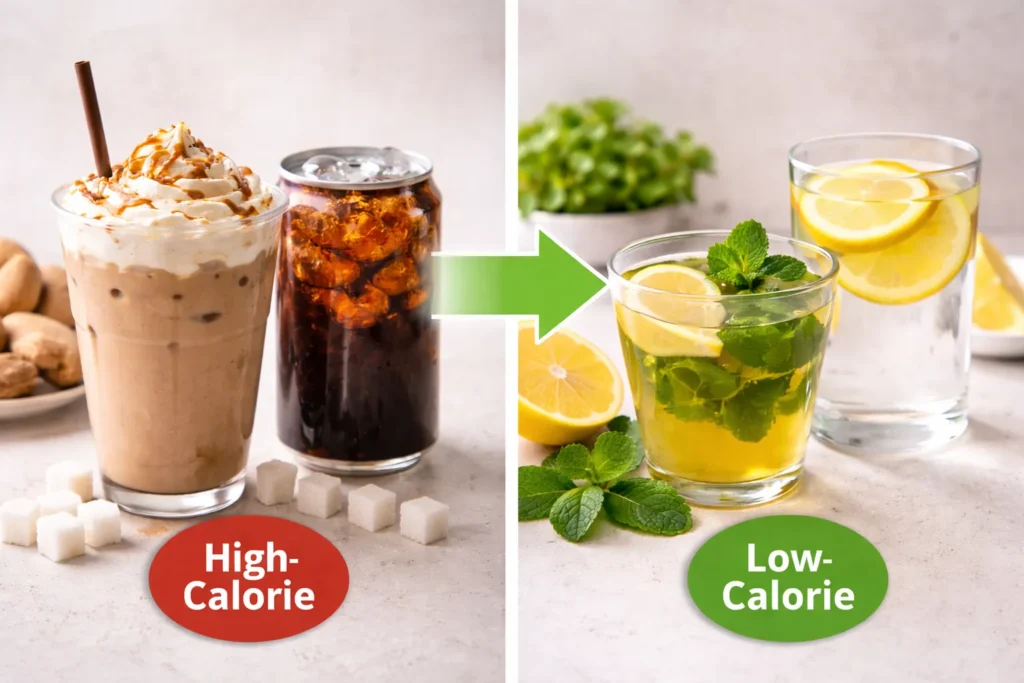
One of the most powerful mechanisms behind natural weight loss drinks is beverage substitution.
Replacing:
- Sugary coffee drinks
- Sweetened teas
- Soda
- Fruit juice
with low-calorie natural weight loss drinks reduces total daily energy intake.
For example:
Replacing a 300-calorie flavored latte with unsweetened green tea reduces energy intake significantly over time.
The drink did not burn fat.
It reduced calories.
In many cases, the success attributed to natural weight loss drinks comes from removing liquid calories rather than stimulating metabolism.
3️⃣ Caffeine and Mild Thermogenesis
Some natural weight loss drinks, particularly green tea and black coffee, contain caffeine.
Caffeine may temporarily increase metabolic rate through thermogenesis and nervous system stimulation.
The National Institutes of Health Office of Dietary Supplements explains caffeine’s physiological effects.
Important context:
- The metabolic increase is modest
- Tolerance develops
- Effects vary between individuals
Caffeine-based natural weight loss drinks may provide short-term support — but they do not override energy balance.
4️⃣ Appetite and Satiety Signaling
Certain natural weight loss drinks are consumed before meals to potentially influence appetite.
Examples include:
- Diluted apple cider vinegar
- Fiber-based beverages
- Calming herbal teas
Some small studies indexed on PubMed have explored vinegar and post-meal glucose response.
Results suggest modest effects, but evidence remains limited.
Herbal options like lemon balm may indirectly influence eating patterns by reducing stress-related appetite cues. For a deeper breakdown, see:
Again, the effect is behavioral — not biochemical fat burning.
The Evidence-Based Perspective on Natural Weight Loss Drinks
When you analyze how natural weight loss drinks function, the pattern becomes clear:
✔ Hydration supports routine
✔ Substitution reduces calories
✔ Caffeine provides mild stimulation
✔ Appetite awareness improves structure
None of these mechanisms directly burn stored fat.
Natural weight loss drinks may support weight management when integrated into a balanced lifestyle — but they are not metabolic shortcuts.
Evidence-Based Natural Weight Loss Drinks (Ranked by Research Support)
Not all natural weight loss drinks are supported equally by scientific evidence.
Some have moderate clinical backing. Others rely primarily on behavioral effects such as hydration structure or calorie displacement.
Below is a structured ranking of natural weight loss drinks based on current research strength, proposed mechanism, and practical impact.
1️⃣ Green Tea
Evidence Strength: Moderate
Green tea is one of the most researched natural weight loss drinks.
Proposed Mechanism:
- Contains catechins (especially EGCG)
- Contains caffeine
- May slightly increase thermogenesis
Research suggests green tea catechins combined with caffeine may modestly increase energy expenditure.
The National Institutes of Health Office of Dietary Supplements discusses botanical ingredients and metabolism context here:
Important context:
- Effects are modest
- Results vary by individual
- Long-term fat loss impact is limited
Green tea may support structured weight management — but it does not create dramatic fat reduction alone.
Best use case: Replacing high-calorie morning beverages.
2️⃣ Black Coffee
Evidence Strength: Moderate
Black coffee is one of the simplest natural weight loss drinks with physiological backing.
Proposed Mechanism:
- Caffeine-induced thermogenesis
- Temporary appetite suppression
The NIH caffeine overview explains caffeine’s role in energy expenditure:
Key considerations:
- Metabolic increase is temporary
- Tolerance develops
- Excess caffeine can disrupt sleep
Black coffee may support short-term metabolic stimulation, but it does not override energy balance.
Best use case: Pre-workout or calorie-free morning stimulant.

3️⃣ Apple Cider Vinegar Drink
Evidence Strength: Limited to Moderate
Apple cider vinegar is frequently listed among natural weight loss drinks.
Proposed Mechanism:
- May modestly influence post-meal glucose response
- Possible mild satiety support
A small clinical study indexed on PubMed explored vinegar and glycemic response.
However:
- Studies are small
- Results are modest
- Long-term evidence is limited
Apple cider vinegar drinks may support appetite awareness — but they are not fat-burning compounds.
Best use case: Diluted pre-meal beverage (with caution for enamel protection).
4️⃣ Lemon Water
Evidence Strength: Behavioral / Indirect
Lemon water is one of the most common natural weight loss drinks — yet its mechanism is often misunderstood.
Proposed Mechanism:
- Hydration
- Calorie displacement
Lemon water does not increase metabolic rate.
Its benefit comes from replacing high-calorie beverages and reinforcing hydration routines.
Harvard T.H. Chan School of Public Health explains hydration and sodium balance here:
Hydration supports normal physiology — not fat oxidation.
Best use case: Morning routine to reduce sugary drink intake.
5️⃣ Pink Salt Drink
Evidence Strength: Hydration-Based / Behavioral
Pink salt drinks are often marketed as metabolic boosters within the natural weight loss drinks category.
In reality, they primarily support hydration structure and routine consistency.
According to USDA FoodData Central, pink Himalayan salt is primarily sodium chloride.
Total sodium intake remains the primary nutritional consideration.
For a full breakdown, see:
Always consider American Heart Association sodium guidance.

6️⃣ Lemon Balm Tea
Evidence Strength: Limited (Stress-Related Support)
Lemon balm is sometimes included among calming natural weight loss drinks.
Proposed Mechanism:
- Nervous system regulation
- Stress-related appetite support
Its weight-related role is indirect.
For full evidence analysis, see:
Lemon balm does not increase metabolism directly — but it may support routine stability in individuals who experience stress-related eating.
Quick Evidence Comparison
| Drink | Mechanism | Evidence Strength | Direct Fat Burning? |
|---|---|---|---|
| Green Tea | Catechins + caffeine | Moderate | Mild / Indirect |
| Black Coffee | Caffeine | Moderate | Temporary |
| Apple Cider Vinegar | Satiety modulation | Limited–Moderate | No |
| Lemon Water | Hydration | Indirect | No |
| Pink Salt Drink | Fluid balance | Behavioral | No |
| Lemon Balm Tea | Stress support | Limited | No |
Clear Pattern Across Natural Weight Loss Drinks
The drinks with the strongest scientific support rely on:
✔ Caffeine
✔ Calorie substitution
✔ Mild appetite modulation
None override sustained calorie balance.
Natural weight loss drinks can support structure, hydration, and consistency — but they are tools, not metabolic shortcuts.
What NOT to Drink When Trying to Lose Weight
Understanding natural weight loss drinks is only half the equation.
To manage weight effectively, it’s equally important to understand which beverages work against your goals. Many drinks marketed as “healthy” can quietly increase daily calorie intake or disrupt appetite regulation.
Here’s where most people go wrong.
1️⃣ Sugary Coffee Drinks
Flavored lattes, blended coffees, and sweetened cold brews often contain:
- 200–500+ calories
- Added syrups
- Sweetened creamers
- Whipped toppings
Liquid sugar does not trigger the same satiety signals as solid food.
According to the Harvard T.H. Chan School of Public Health, sugar-sweetened beverages are strongly associated with weight gain risk:
Replacing these with lower-calorie natural weight loss drinks such as unsweetened green tea or black coffee can significantly reduce total energy intake.
2️⃣ Fruit Juice (Even “100% Natural”)
Many people assume fruit juice supports health because it contains vitamins.
However:
- Juice removes fiber
- Sugar becomes concentrated
- Calorie density increases
The American Heart Association advises limiting added sugars and being mindful of liquid calories:
Whole fruit supports satiety.
Juice often increases calorie intake without fullness.
Natural weight loss drinks emphasize hydration and calorie control — not sugar concentration.m
3️⃣ “Detox” Drinks With Hidden Calories
Some commercially marketed detox beverages include:
- Added sweeteners
- Concentrated fruit extracts
- Honey or syrups
- High-calorie blends
The word “detox” is often marketing language.
The body already has built-in detox systems:
- Liver
- Kidneys
- Gastrointestinal tract
No drink independently flushes stored fat.
Natural weight loss drinks that focus on hydration and structured routines are fundamentally different from high-calorie detox blends.
4️⃣ Alcoholic Beverages
Alcohol contributes calories without nutritional value:
- 7 calories per gram
- Often paired with sugary mixers
- May lower dietary restraint
Alcohol can also:
- Disrupt sleep
- Increase late-night snacking
- Impair recovery
Reducing alcohol often produces more measurable impact than adding new beverages.
5️⃣ High-Sodium Concentrated Drinks (Improperly Measured)
While mineral-based beverages can support hydration, concentrated salt solutions can:
- Increase total sodium intake
- Promote fluid retention
- Elevate blood pressure risk
The American Heart Association provides sodium guidance.
If using mineral hydration routines, see the structured explanation in the:
- pink salt weight loss guide
- pink salt trick recipe
Measurement matters.
Natural weight loss drinks should be diluted and controlled — not concentrated.
The Core Principle
Weight management is less about adding “magic” drinks and more about removing hidden liquid calories.
The most effective beverage strategy usually includes:
✔ Water
✔ Unsweetened tea
✔ Black coffee
✔ Properly diluted hydration drinks
✔ Calorie-free herbal options
Natural weight loss drinks work best when they replace high-calorie beverages — not when they are layered on top of them.
Strategic Takeaway
If someone removes:
- Sugary coffee drinks
- Soda
- Juice
- High-calorie detox blends
They often see greater results than by adding new beverages alone.
Natural weight loss drinks are tools for structure and substitution — not shortcuts.
How to Choose the Right Natural Weight Loss Drink for Your Goal
Not all natural weight loss drinks serve the same purpose.
Some support hydration.
Some offer mild metabolic stimulation.
Others may help with appetite awareness or stress-related eating patterns.
Choosing the right option depends on your primary goal — not on trends.
Below is a structured guide to help you match the drink to your objective.
Goal: Boost Energy & Mild Metabolic Support
If your primary goal is short-term energy and a slight increase in calorie expenditure, caffeine-containing natural weight loss drinks may be appropriate.
Best Options:
- Green tea
- Black coffee
These beverages contain caffeine, which may temporarily increase energy expenditure.
The National Institutes of Health Office of Dietary Supplements explains caffeine’s thermogenic effects.
Important considerations:
- Effects are modest
- Tolerance develops
- Sleep disruption can negatively affect weight regulation
If sleep quality suffers, metabolic regulation may decline — which defeats the purpose.
Goal: Improve Hydration & Reduce Liquid Calories
If your main challenge is sugary beverages, hydration-focused natural weight loss drinks are more appropriate.
Best Options:
- Lemon water
- Unsweetened herbal tea
- Diluted mineral drinks
Hydration helps maintain physiological stability, but does not independently increase fat oxidation.
The Harvard T.H. Chan School of Public Health emphasizes that hydration supports normal bodily function, not metabolic acceleration.
If exploring mineral-based hydration methods, see:
The benefit often comes from calorie substitution — not chemistry.
Goal: Appetite Awareness & Portion Control
Some natural weight loss drinks are consumed before meals to potentially support satiety.
Best Options:
- Diluted apple cider vinegar
- Fiber-containing beverages
- Warm herbal teas
Small clinical studies have examined vinegar and post-meal glucose response (PubMed reference).
However:
- Evidence remains limited
- Effects are modest
- Not suitable for everyone
These drinks may support structured eating — but they do not chemically suppress appetite in a dramatic way.
Goal: Reduce Stress-Related Eating
Stress plays a significant role in appetite regulation.
Some calming herbal natural weight loss drinks may support routine consistency in individuals who struggle with stress-driven snacking.
Best Option:
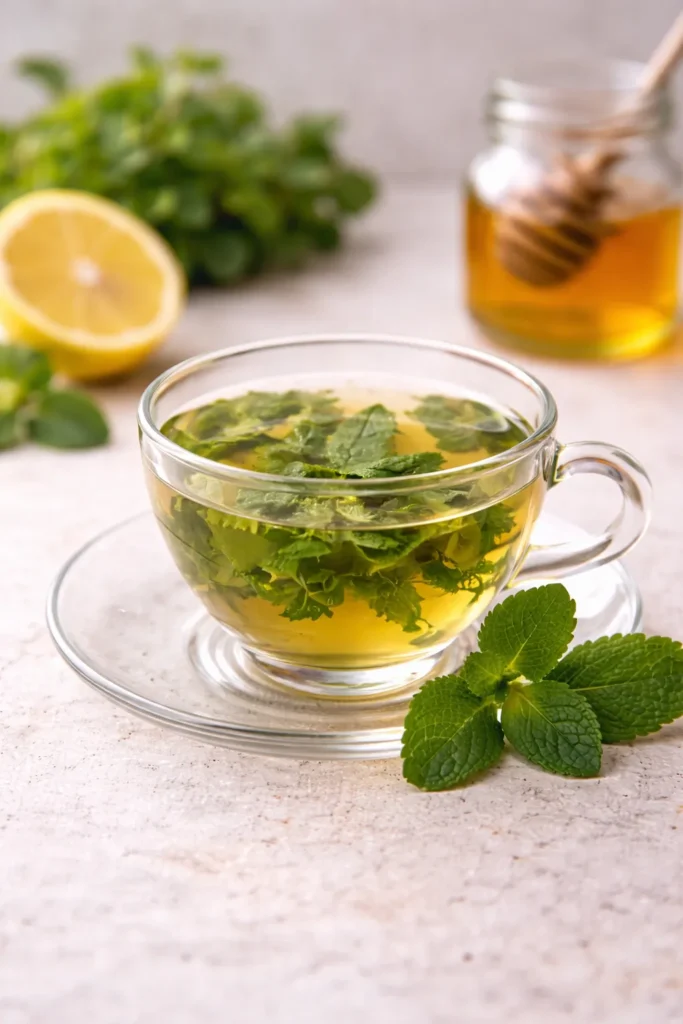
- Lemon balm tea
Lemon balm is traditionally used for nervous system regulation and digestive comfort.
The mechanism is behavioral support — not metabolic stimulation.
How to Think Strategically About Natural Weight Loss Drinks
Instead of asking:
“Which drink burns the most fat?”
Ask:
“What behavior does this drink improve?”
Because the real impact of natural weight loss drinks typically comes from:
✔ Removing liquid calories
✔ Supporting hydration structure
✔ Improving meal timing
✔ Reinforcing routine consistency
✔ Supporting sleep and stress regulation
The drink itself is rarely the transformation.
The habit is.
Quick Goal-Based Comparison
| Goal | Recommended Drink Type | Evidence Level | Direct Fat Burning? |
|---|---|---|---|
| Energy boost | Green tea / Coffee | Moderate | Mild / Temporary |
| Hydration | Lemon water | Indirect | No |
| Appetite awareness | ACV drink | Limited–Moderate | No |
| Stress support | Lemon balm tea | Limited | No |
| Mineral hydration | Pink salt drink | Behavioral | No |
Final Perspective on Choosing Natural Weight Loss Drinks
The strongest natural weight loss drinks are the ones that:
✔ Replace high-calorie beverages
✔ Fit your lifestyle
✔ Support consistency
✔ Do not disrupt sleep
✔ Stay within safe intake limits
Sustainability beats stimulation.
Do Natural Weight Loss Drinks Actually Work? (Realistic Expectations)
Short answer:
Natural weight loss drinks can support weight management — but they do not directly cause fat loss on their own.
To understand whether natural weight loss drinks “work,” we need to define what “work” means.
If “work” means:
- Rapid fat burning
- Spot reduction
- Metabolic reset
- Detoxification of stored fat
Then no — natural weight loss drinks do not perform those functions.
But if “work” means:
✔ Supporting hydration
✔ Reducing liquid calorie intake
✔ Reinforcing structured habits
✔ Providing mild metabolic stimulation (in caffeine-based drinks)
✔ Supporting appetite awareness
Then yes — natural weight loss drinks can be helpful tools.
What the Science Actually Supports
Across research, the strongest evidence within natural weight loss drinks falls into three categories:
1️⃣ Calorie Displacement
Replacing sugary beverages with low-calorie alternatives consistently reduces overall energy intake.
The Harvard T.H. Chan School of Public Health highlights the link between sugar-sweetened beverages and weight gain.
When natural weight loss drinks replace those beverages, calorie intake drops.
That is often the real driver of change.
2️⃣ Mild Thermogenic Support (Caffeine-Based)
Green tea and coffee contain caffeine, which may temporarily increase energy expenditure.
The National Institutes of Health Office of Dietary Supplements explains caffeine’s thermogenic role
However:
- The increase is modest
- Tolerance develops
- Effects vary by individual
Caffeine may support momentum — but it does not override sustained calorie balance.
3️⃣ Behavioral Structure & Habit Reinforcement
Many natural weight loss drinks function primarily as structured routines.
Morning hydration rituals
Pre-meal tea
Evening calming beverages
Structure improves consistency.
And consistency drives long-term outcomes.
For example:
- Mineral hydration routines are explained in the pink salt weight loss guide
- Stress-support beverages are analyzed in the /lemon-balm-weight-loss-guide/
The mechanism is behavioral leverage — not metabolic magic.
What Natural Weight Loss Drinks Cannot Do
It is important to clearly state what these beverages do NOT do:
✘ They do not bypass calorie balance
✘ They do not detox stored fat
✘ They do not target belly fat specifically
✘ They do not replace dietary quality
✘ They do not compensate for sleep deprivation
Any claim suggesting otherwise is not supported by strong clinical evidence.
Why Results Feel Real for Some People
Many individuals report positive results when starting natural weight loss drinks.
Here’s why:
• They reduce sugary beverage intake
• They increase water consumption
• They improve meal timing awareness
• They become more intentional about eating
• They reinforce routine
These shifts create sustainable change.
The drink is often the catalyst — not the cause.
The Most Effective Strategy
If you want natural weight loss drinks to actually support your goals:
✔ Use them to replace high-calorie beverages
✔ Measure ingredients carefully
✔ Prioritize sleep and protein intake
✔ Maintain strength training or physical activity
✔ Stay within sodium and caffeine guidelines
Think of these drinks as supportive tools — not primary drivers.
Final Evidence-Based Perspective
Natural weight loss drinks can:
Support hydration
Reduce liquid calories
Provide mild stimulant effects
Encourage structure
They cannot:
Independently burn significant fat
Override dietary excess
Replace sustainable habits
The most effective approach is not asking:
“Which drink burns the most fat?”
But asking:
“Which drink helps me maintain better daily habits?”
That is where real, sustainable weight management begins.
FAQ – Natural Weight Loss Drinks & Belly Fat
What drink burns the most belly fat?
No drink directly burns belly fat.
Fat loss occurs when you maintain a consistent calorie deficit over time. The body decides where fat is reduced — not a specific beverage.
Some drinks may support weight management indirectly:
Green tea (mild thermogenic support from caffeine + catechins)
Black coffee (temporary metabolic stimulation)
Water or lemon water (calorie displacement)
High-protein drinks (satiety support)
However, none of these target abdominal fat specifically. Sustainable fat loss requires structured nutrition, resistance training, sleep quality, and overall calorie balance.
How did Kelly Clarkson lose weight so quickly?
Kelly Clarkson has publicly discussed making dietary changes under medical guidance.
Reports suggest her weight loss involved:
Structured nutrition adjustments
Medical supervision
Addressing underlying health factors
Long-term consistency
There is no verified evidence that she relied on a specific weight loss drink.
Celebrity weight loss is typically multi-factorial and often supported by professional oversight.
How to lose 20 pounds in a month naturally?
Losing 20 pounds in one month is aggressive and may not be safe or sustainable for most people.
A generally accepted safe rate of weight loss is about 1–2 pounds per week.
Natural strategies include:
Reducing calorie intake moderately
Increasing protein consumption
Strength training
Improving sleep
Eliminating liquid calories
Rapid weight loss attempts can increase muscle loss, metabolic slowdown, and rebound weight gain.
Always consult a healthcare professional before attempting aggressive weight changes.
What is the 4 ingredient weight loss drink?
Many viral “4 ingredient weight loss drinks” include variations of:
Water
Lemon juice
Apple cider vinegar
Pink salt or honey
These drinks may support hydration or appetite awareness.
They do not directly burn fat.
Their potential benefit usually comes from replacing high-calorie beverages rather than from metabolic effects.
What kills belly fat naturally?
Nothing “kills” belly fat directly.
Abdominal fat decreases when overall body fat decreases.
The most effective natural strategies include:
Calorie control
Resistance training
Adequate protein intake
Reducing sugar-sweetened beverages
Improving sleep duration
Spot reduction through drinks, foods, or supplements is not supported by physiology.
What three ingredients do you drink before bed to lose weight?
Common bedtime drink combinations include:
Warm water
Lemon
Apple cider vinegar
Herbal teas (like chamomile or lemon balm)
These drinks may:
Promote relaxation
Support hydration
Reinforce routine
They do not increase overnight fat burning.
In fact, sleep quality plays a far more important role in weight regulation than any bedtime beverage.
This content is for informational purposes only and does not replace medical advice. Consult your physician or a qualified healthcare professional before making any changes to your diet, supplement routine, or weight-management plan.