
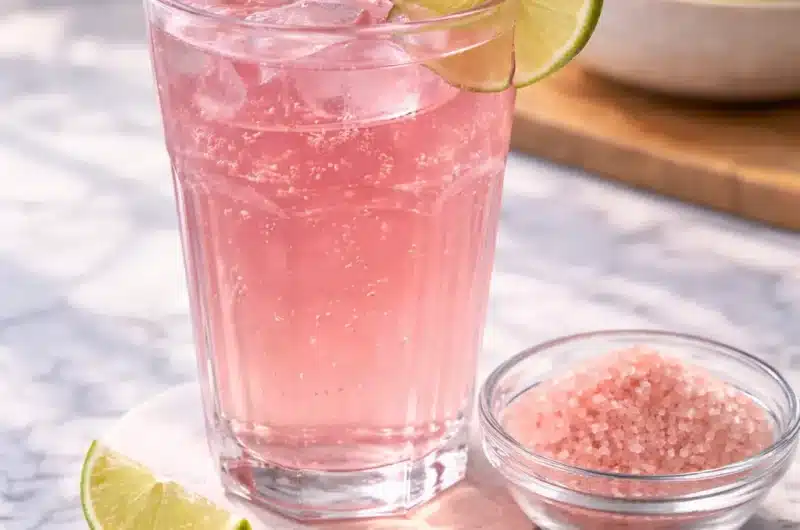
Pink Salt Weight Loss Guide (What It Is and What It Isn’t)
The pink salt weight loss guide explains how pink Himalayan salt is used in hydration rituals, what science says about sodium and fluid balance, and whether it meaningfully contributes to fat loss. It is an informational framework — not a guaranteed weight-loss method.
The pink salt weight loss guide exists because the topic has expanded beyond a simple drink trend. What started as a viral morning salt-water ritual has grown into broader claims about hydration, metabolism, and fat burning.
This guide separates three things clearly:
- What pink salt actually does physiologically
- What hydration can influence
- What it cannot do in terms of fat loss
What Pink Salt Actually Is
Pink Himalayan salt is primarily sodium chloride, as detailed in our full breakdown of pink salt recipe ingredients. The pink color comes from trace minerals such as iron and magnesium, but these exist in very small amounts.
According to nutrient databases like USDA FoodData Central, sodium remains the dominant component of pink salt regardless of mineral marketing.
That matters because the mechanism people associate with “weight loss” is usually hydration — not trace mineral intake.
This foundational science is why the pink salt weight loss guide focuses on physiology before trends.
Sodium and Hydration: What the Science Says
Sodium plays a role in:
- Fluid balance
- Nerve transmission
- Muscle contraction
The Harvard T.H. Chan School of Public Health explains that the body requires sodium for these basic physiological functions, but excess intake can increase cardiovascular risk.
The pink salt weight loss guide therefore starts with this foundation:
Pink salt supports sodium intake.
Sodium supports fluid regulation.
Fluid regulation does not equal fat burning.
That distinction is essential.
The pink salt weight loss guide prioritizes evidence over viral claims.
Why Pink Salt Became Linked to Weight Loss
The connection largely comes from three behavioral effects:
- Morning hydration routines
- Fasting communities using electrolyte drinks
- Replacing high-calorie beverages
If someone swaps a sugary latte for diluted salt water, calorie intake drops. That change — not the salt itself — may influence weight over time.
For a step-by-step drink version of this approach, see our pink salt weight loss drink breakdown.
If you’re exploring the viral formulation specifically, read the full pink salt trick recipe breakdown.
And for the regional variation, explore our full Japanese pink salt weight loss drink guide.
What This Guide Covers (And Why It’s Different)
Unlike recipe-focused posts, the pink salt weight loss guide answers:
- Does pink salt increase metabolism?
- Does electrolyte balance influence fat loss?
- Is there clinical evidence supporting these claims?
- What are safe sodium limits?
- Who should avoid daily salt drinks?
It does not promote:
✘ Rapid fat loss claims
✘ Detox guarantees
✘ Mineral-based metabolism hacks
This guide exists to clarify — not amplify — trending wellness claims.
Safety Context: Why Moderation Matters
The American Heart Association recommends limiting sodium intake for cardiovascular health, particularly in individuals with elevated blood pressure.
Because pink salt is still sodium, the total daily intake matters more than the type of salt used.
The pink salt weight loss guide therefore frames pink salt as:
A hydration tool
Not a metabolic shortcut
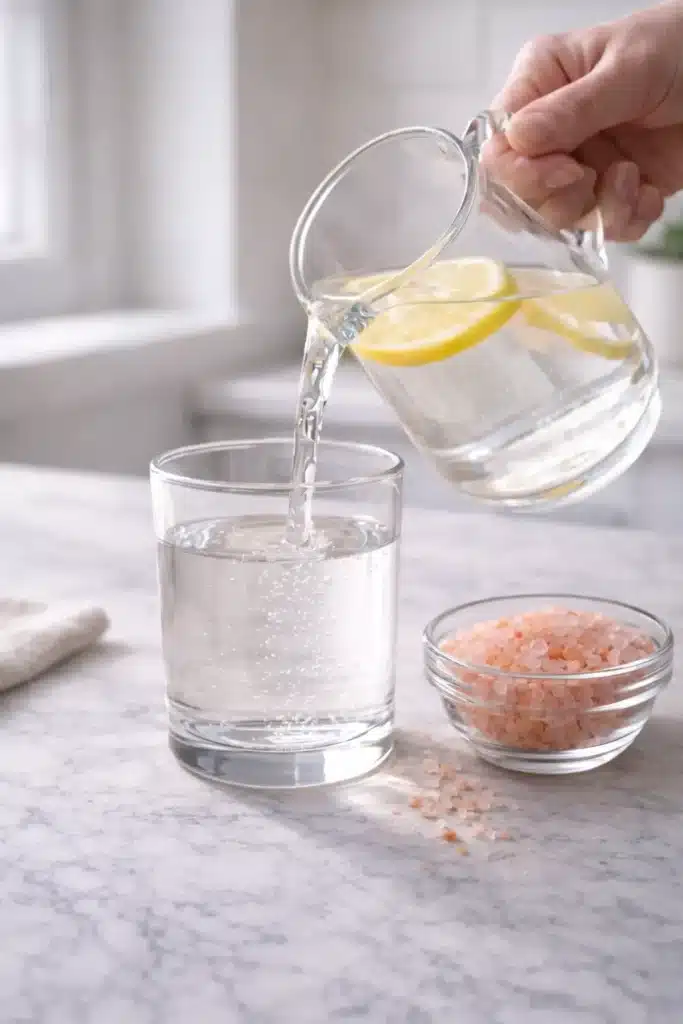
Does Pink Salt Actually Help? | Pink Salt Weight Loss Guide Analysis
Pink salt does not directly cause fat loss. Its potential impact on weight comes from hydration habits and behavioral changes, not from metabolic acceleration.
This is the central question behind the pink salt weight loss guide.
To answer it properly, we need to separate physiology from marketing.
1. Sodium Does Not Burn Fat
Pink Himalayan salt is primarily sodium chloride.
There is no clinical evidence showing that sodium intake — from pink salt or table salt — increases fat oxidation or directly reduces body fat.
Weight loss occurs when sustained calorie intake remains lower than energy expenditure. Sodium does not alter that fundamental equation.
The role of pink salt in the pink salt weight loss guide is hydration-related, not thermogenic.
2. Hydration Can Influence Perceived Hunger
Mild dehydration is sometimes confused with hunger signals.
When someone begins the day with fluids, they may experience:
- Reduced early cravings
- Better appetite timing
- More stable beverage choices
Hydration influences behavior — not fat-burning chemistry.
This is one reason morning salt drinks became popular in fasting communities.
3. Electrolytes and Fasting Context
Some people use diluted salt water during fasting windows to help maintain electrolyte balance.
Electrolytes — including sodium — help regulate fluid movement in the body. The National Institutes of Health Office of Dietary Supplements explains the role of sodium in nerve and muscle function.
However, electrolyte balance alone does not equal fat reduction. It simply supports physiological stability during periods without food.
4. Replacement Effect (Where Change Often Happens)
One of the most overlooked factors is substitution.
If someone replaces:
- Sugary coffee drinks
- Sweetened juices
- High-calorie morning beverages
With a low-calorie salt-water drink, calorie intake drops.
That change may support weight loss — but the mechanism is caloric reduction, not pink salt itself.
This is why the pink salt weight loss guide emphasizes context over hype.
What the Evidence Does Not Show
There is currently no high-quality clinical evidence demonstrating that pink salt independently:
✘ Boosts metabolism
✘ Targets belly fat
✘ Increases calorie burn
✘ Detoxifies stored fat
Those claims are not supported by established nutrition research.
Balanced Conclusion
Pink salt may:
✔ Support hydration routines
✔ Encourage structured mornings
✔ Replace higher-calorie beverages
It does not function as a direct fat-loss compound.
The pink salt weight loss guide exists to clarify that difference.
Hydration, Electrolytes, and Metabolism Explained
Hydration supports normal metabolic function, but increasing sodium intake does not directly increase fat burning. Electrolytes regulate fluid balance — not calorie expenditure.
To understand where pink salt fits into weight discussions, we need to separate three related but different systems:
- Hydration
- Electrolyte balance
- Metabolism
They interact — but they are not interchangeable.
1. What Electrolytes Actually Do
Electrolytes are minerals that carry an electrical charge in the body. These include:
- Sodium
- Potassium
- Magnesium
- Chloride
Their primary role is fluid regulation and nerve signaling.
Sodium, the main component of pink salt, helps regulate how fluids move in and out of cells. It does not increase fat oxidation or energy expenditure directly.
According to the Harvard T.H. Chan School of Public Health, sodium is required for basic physiological function but should remain within healthy intake ranges.
2. Hydration and Energy Perception
When hydration is adequate, people may experience:
- Improved alertness
- More stable appetite signals
- Reduced fatigue
However, hydration does not create a calorie deficit.
It supports normal function — it does not override energy balance.
In the context of the pink salt weight loss guide, hydration is a behavioral support mechanism, not a metabolic trigger.
3. Does Sodium Influence Metabolism?
There is no strong clinical evidence that sodium intake increases metabolic rate.
Metabolism is influenced primarily by:
- Lean body mass
- Hormonal regulation
- Physical activity
- Total calorie intake
Electrolytes support cellular function. They do not accelerate fat burning.
This distinction prevents overinterpreting hydration benefits as metabolic changes.
4. Where Confusion Often Happens
The misunderstanding often comes from this chain:
Hydration improves how you feel →You make better food choices →Calorie intake stabilizes →
Weight changes occur
The change is behavioral, not biochemical.
The pink salt weight loss guide focuses on clarifying that pathway.
Practical Takeaway
Electrolytes:
✔ Help regulate fluid balance
✔ Support nerve and muscle function
✔ Maintain physiological stability
They do not:
✘ Melt body fat
✘ Increase resting metabolic rate
✘ Replace structured nutrition
Hydration supports a healthy system. It does not independently create weight loss.
The pink salt weight loss guide keeps hydration in perspective, not hype.
Pink Salt Drink vs Pink Salt Trick vs Sole Water (What’s the Difference?)
A pink salt drink is a diluted salt-water beverage used for hydration. The pink salt trick refers to a viral morning version of that drink. Sole water is a concentrated salt brine made by fully saturating water with salt. They are not the same in strength or purpose.
These terms are often used interchangeably online, but they represent different approaches.
Understanding the distinction prevents confusion and excessive sodium intake.
1. Pink Salt Weight Loss Drink
This is the most straightforward version.
It typically includes:
- Warm water
- A small measured pinch of pink salt
- Optional lemon or apple cider vinegar
It is diluted and intended as a mild hydration beverage.
For exact ratios and preparation details, see our pink salt weight loss drink breakdown (internal anchor).
This format emphasizes moderation.
2. Pink Salt Trick
The pink salt trick is the viral variation popularized on social media.
It follows a similar structure but is often framed as:
- A metabolism booster
- A detox accelerator
- A fasting support hack
In reality, it remains a diluted salt-water drink with optional acidity.
The difference is mostly branding and presentation — not chemistry.
3. Sole Water
Sole water is fundamentally different.
It is made by:
- Filling a jar with pink salt
- Adding water
- Allowing the mixture to fully saturate overnight
This creates a concentrated brine solution.
Only a small amount of sole is added to water before drinking.
Because sole water begins as a saturated salt solution, sodium concentration is significantly higher before dilution.
This is where safety awareness becomes critical.
Key Differences at a Glance
| Method | Salt Concentration | Purpose | Risk Level |
|---|---|---|---|
| Pink salt drink | Diluted | Hydration ritual | Low (if measured) |
| Pink salt trick | Diluted | Viral morning routine | Low (if measured) |
| Sole water | Saturated concentrate | Mineral-focused ritual | Moderate if misused |
The primary difference is concentration — not ingredient type.
Why This Matters
When people assume these methods are identical, they may:
- Use excessive salt
- Misjudge sodium intake
- Expect metabolic effects that are not supported
The pink salt weight loss guide exists to clarify these distinctions.
Practical Takeaway
If your goal is hydration support:
Diluted methods are safer and more predictable.
If experimenting with sole water:
Measure carefully and consider total daily sodium intake.
And if you’re exploring the regional variation, see our detailed Japanese pink salt weight loss drink overview (internal anchor).
Each approach exists within the same hydration theme — but they are not interchangeable.
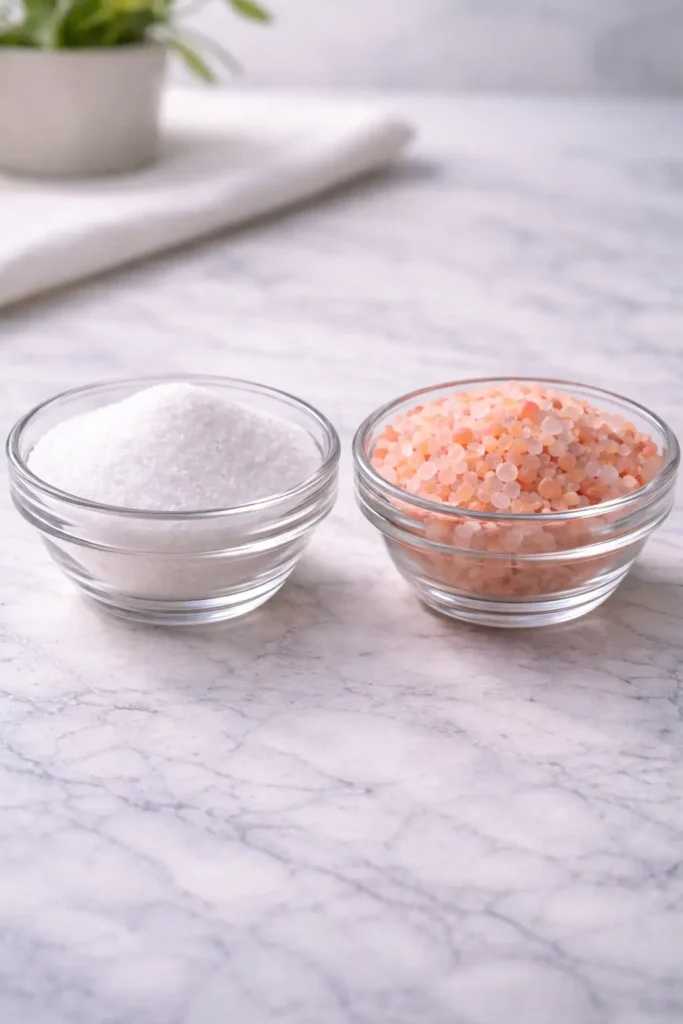
Safe Sodium Limits and Who Should Avoid It
Pink salt is still sodium. While small amounts may fit within general intake ranges, excessive sodium consumption can increase cardiovascular risk. Total daily intake matters more than salt type.
Any discussion of salt and weight must include safety context.
Pink Himalayan salt is often marketed as “healthier” than table salt. Nutritionally, it is still primarily sodium chloride.
According to the American Heart Association, most adults should aim to limit sodium intake to reduce cardiovascular strain.
The key variable is total sodium intake — not whether it is pink or white.
How Much Sodium Is in a Typical Morning Drink?
A small pinch (about ⅛ teaspoon) of salt contains roughly 150–200 mg of sodium, depending on density.
For context, public health recommendations generally suggest keeping total daily sodium under approximately 2,300 mg — and often lower for individuals with hypertension.
This means a diluted morning drink can fit within limits — but it should not be layered on top of a high-sodium diet.
Who Should Be Cautious
Individuals who should approach salt-based hydration carefully include:
- Those with high blood pressure
- People with kidney disease
- Individuals on sodium-restricted diets
- Anyone with fluid retention issues
If unsure, consulting a healthcare professional is advisable before adopting daily salt drinks.
The pink salt weight loss guide prioritizes safety over trend appeal.
Why Salt Type Does Not Override Physiology
Marketing language often emphasizes “trace minerals” in pink salt.
However:
- The mineral quantities are small
- Sodium remains the dominant component
- Cardiovascular risk is linked to sodium load, not salt color
This is why moderation is central to this guide.
Practical Safety Framework
If using a diluted salt drink:
✔ Measure carefully
✔ Account for sodium in meals
✔ Avoid stacking with processed foods
✔ Monitor how you feel
Avoid:
✘ Increasing salt beyond recommended levels
✘ Assuming pink salt neutralizes sodium impact
✘ Using concentrated brine without understanding dosage
Hydration should support health — not compromise it.
Common Myths About Pink Salt and Fat Loss
Pink salt does not burn fat, detox stored toxins, or increase metabolism directly. Most weight-related effects associated with salt water come from hydration habits and beverage substitution — not mineral chemistry.
The pink salt weight loss guide exists partly because misinformation spreads faster than nuance.
Let’s separate common myths from evidence-based reality.
Myth 1: Pink Salt Boosts Metabolism
This claim appears frequently on social media.
There is no clinical evidence showing that pink Himalayan salt increases resting metabolic rate.
Metabolism is primarily influenced by:
- Lean muscle mass
- Hormonal regulation
- Physical activity
- Total energy intake
Sodium supports fluid balance — not thermogenesis.
Myth 2: Pink Salt “Detoxifies” the Body
The term “detox” is often loosely used in wellness marketing.
The human body already has detoxification systems:
- Liver
- Kidneys
- Gastrointestinal tract
Salt water does not flush fat-soluble toxins from cells. It primarily contributes sodium and water.
Hydration supports normal organ function — but it does not act as a cleansing agent.
Myth 3: Trace Minerals Make Pink Salt Superior for Weight Loss
Pink salt contains trace minerals such as iron and magnesium.
However, according to nutrient databases like USDA FoodData Central, these minerals exist in very small amounts relative to daily nutritional requirements.
Their presence does not meaningfully alter fat metabolism.
The mineral difference is measurable — but not transformative.
Myth 4: Sole Water Is More Effective Than Diluted Salt Drinks
Some claim concentrated brine (“sole”) provides enhanced benefits.
In reality, sole water is simply a more concentrated salt solution. Its effect depends entirely on dilution and total sodium intake.
Higher concentration does not equal greater fat loss.
It increases sodium load — nothing more.
Myth 5: Pink Salt Targets Belly Fat
Spot reduction is not supported by physiology.
Fat loss occurs systemically when sustained energy balance shifts over time.
No form of salt — pink, white, or sea — selectively reduces abdominal fat.
Why These Myths Persist
The confusion often stems from:
- Rapid visible bloating changes
- Short-term water balance shifts
- Behavioral changes after starting a routine
- Influencer marketing language
The pink salt weight loss guide clarifies that hydration shifts can change how the body feels — but that is not the same as fat loss.
Balanced Perspective
Pink salt may:
✔ Support hydration rituals
✔ Encourage structured mornings
✔ Replace calorie-dense beverages
It does not:
✘ Increase metabolic rate
✘ Detoxify stored fat
✘ Create targeted fat loss
✘ Replace sustainable nutrition habits
Clarity protects both expectations and long-term credibility.

Best Time to Use Pink Salt in a Wellness Routine
The most common time to use diluted pink salt water is first thing in the morning to support hydration after sleep. Timing affects routine consistency more than metabolism.
Timing matters — but not in the way social media suggests.
The body does not burn more fat at 6 a.m. because of salt intake. What changes is behavior and hydration rhythm.
1. Morning Use (Most Popular)
After 6–8 hours without fluids, mild dehydration is normal.
Starting the day with warm water — with or without a small amount of salt — may:
- Support fluid balance
- Reduce early caffeine dependency
- Improve appetite awareness
Morning use is popular because it builds routine consistency, not because it activates fat burning.
For exact ratios and preparation details, refer to the pink salt weight loss drink guide.
2. During Fasting Windows
Some people include diluted salt water during intermittent fasting.
The rationale is electrolyte support while abstaining from food.
Electrolytes help regulate fluid balance and nerve function, but they do not independently increase fat oxidation.
If using salt during fasting, moderation is essential, and total sodium intake should remain within general guidelines.
3. Before Exercise
Occasionally, people consume a small amount of salt water before workouts.
Sodium can assist fluid retention during longer sessions or in hot environments.
However:
- This is not necessary for short, low-intensity activity
- It does not increase calorie burn
Hydration strategy should match activity level, not trends.
4. When It’s Probably Unnecessary
Adding salt water may not be beneficial if:
- Daily sodium intake is already high
- Hydration is already adequate
- There are cardiovascular concerns
Routine should be intentional, not automatic.
Behavioral Perspective
The most meaningful effect of timing is psychological.
A structured morning ritual can influence:
- Beverage choices
- Meal pacing
- Snack frequency
- Daily consistency
The pink salt weight loss guide emphasizes timing as a routine tool — not a metabolic hack.
Practical Recommendation
If experimenting:
✔ Use small, measured amounts
✔ Pair with adequate water intake
✔ Monitor total sodium consumption
✔ Prioritize overall nutrition quality
The timing supports structure.
Structure supports consistency.
Consistency drives long-term outcomes.
Timing is addressed in the pink salt weight loss guide as a structure tool, not a fat-loss mechanism.
FAQ: Pink Salt Weight Loss Guide
Below are the most common questions addressed in this pink salt weight loss guide.
Does pink salt help you lose weight?
Pink salt does not directly cause fat loss. Any weight-related changes usually come from improved hydration habits, beverage substitution, or overall lifestyle adjustments — not from the salt itself.
Is pink Himalayan salt healthier than regular salt?
Nutritionally, both are primarily sodium chloride. Pink salt contains trace minerals, but the amounts are small and do not significantly impact metabolism or fat loss.
The key factor is total sodium intake, not color or origin.
Can drinking salt water reduce belly fat?
No. Spot reduction is not supported by physiology. Fat loss occurs throughout the body when sustained calorie balance shifts over time. Salt water does not target abdominal fat.
What is the difference between sole water and a pink salt drink?
Sole water is a concentrated salt brine made by saturating water with salt. A pink salt drink is diluted and uses a measured pinch per cup of water. The difference lies in concentration, not ingredient type.
Concentration determines sodium load.
For a side-by-side comparison including preparation methods, see our detailed pink salt trick recipe explanation.
Is it safe to drink pink salt water every day?
For healthy adults using small amounts, it may fit within daily sodium recommendations. However, individuals with high blood pressure, kidney conditions, or sodium restrictions should consult a healthcare professional before daily use.
Total intake matters more than frequency alone.
Does pink salt boost metabolism?
There is no strong clinical evidence showing that pink salt increases resting metabolic rate. Metabolism is primarily influenced by lean mass, hormones, and activity level — not sodium intake.
Why do people say it works?
The perceived benefits often come from:
Starting the day hydrated
Replacing higher-calorie beverages
Establishing structured routines
Short-term changes in water balance
Behavioral shifts are frequently mistaken for biochemical effects.
What is the safest way to try it?
If experimenting:
Use a measured pinch (about ⅛ teaspoon or less)
Track total sodium intake
Avoid combining with high-sodium meals
Focus on overall nutrition quality
Hydration should support health — not replace balanced habits.
Sources & References for Pink Salt Weight Loss Guide
The information in this guide is supported by established nutrition and public health resources. These references provide context for sodium intake, hydration, and electrolyte balance.
Sodium and General Health
Harvard T.H. Chan School of Public Health – Salt and Sodium
Explains sodium’s role in fluid balance, nerve function, and recommended intake levels.
American Heart Association – Sodium Guidelines
Provides public health recommendations for daily sodium intake and cardiovascular considerations.
Nutrient Composition Data
USDA FoodData Central
Official database showing the nutrient composition of pink Himalayan salt and sodium chloride.
Electrolytes & Physiological Function
National Institutes of Health (NIH) – Sodium Fact Sheet
Overview of sodium’s biological role, intake recommendations, and health context.
As emphasized throughout this pink salt weight loss guide, moderation remains essential.
Important Context
This pink salt weight loss guide is informational and not a substitute for medical advice. Individuals with hypertension, kidney conditions, or sodium-restricted diets should consult a healthcare professional before modifying daily salt intake.



Pingback: Pink Salt Recipe Ingredients: What’s Really Inside?
Pingback: Pink Salt Trick Recipe (2026) – Does the Viral Drink Work?
Pingback: Pink Salt Weight Loss Drink – Viral Morning Recipe 2026
Pingback: Japanese Pink Salt Weight Loss Drink – Detox Trick 2026
Pingback: Tram Sauce Recipe (2026) – Easy Tamarind Chili Mayo at Home